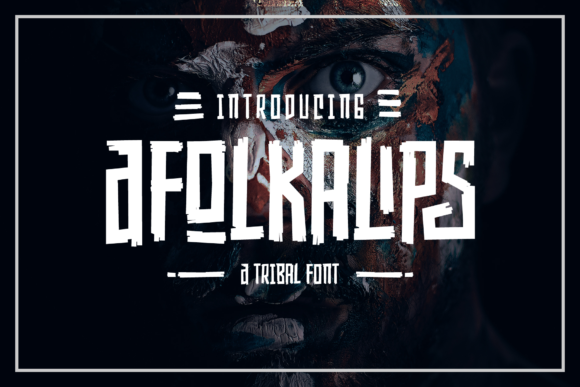
Afolkalips
If you’ve ever spent ten minutes scrolling through font libraries just to find something that feels both fresh and timeless—something that doesn’t scream “trendy” but still stands out in a crowded feed—you know how rare that sweet spot is. Afolkalips lands right there. It’s not another minimalist sans-serif or a nostalgic serif revival. It’s a display font with personality: clean lines, subtle contrast, confident spacing, and a quiet elegance that works whether you’re designing a coffee shop chalkboard menu or a keynote slide for investors.
Where Afolkalips Fits Naturally
Afolkalips isn’t built for body text—it’s made for moments that need attention without shouting. Think of it as the visual equivalent of a well-timed pause in a conversation: intentional, memorable, and effortlessly grounded. You’ll reach for it when the goal is clarity *and* character—not just legibility, but resonance.
For example, a freelance graphic designer recently used Afolkalips for a local bookstore’s seasonal newsletter banner. The font gave the headline “Winter Reads Await” warmth and sophistication—no extra illustration needed. Readers paused. They clicked. That’s not accidental. It’s what happens when typography supports intent instead of competing with it.
Real People, Real Projects
Bloggers and content creators often struggle with cover images that look generic. Afolkalips changes that. Pair it with a muted photo background and a short title—like “Why My Morning Routine Changed Everything”—and suddenly your Pinterest pin or Substack header feels curated, not canned. It reads like it was made *for* that idea, not slapped on top of it.
Educators building digital learning materials use Afolkalips for module titles and section headers in LMS dashboards (think Canvas or Moodle). Its open letterforms and consistent rhythm improve scanability—especially on tablets or shared classroom screens—while keeping the tone approachable, not clinical. One high school science teacher told us her students “actually notice the headings now,” which sounds small until you realize how often learners skip over poorly signaled content.
Small business owners rely on tools like Canva or Adobe Express—and Afolkalips integrates smoothly into both. A ceramicist used it across Instagram story highlights (“New Glazes,” “Workshops,” “Shop Updates”) to unify her brand voice. No logo redesign needed. Just one font, applied consistently, made her feed feel more intentional and less like a series of afterthoughts.
Freelancers pitching creative work add Afolkalips to proposal covers and case study headers. It signals confidence without pretension—exactly the balance clients want when evaluating someone’s taste and judgment. One UX writer said using Afolkalips on her portfolio’s project thumbnails helped her stand out among dozens of candidates who defaulted to Inter or Montserrat. Not because it’s flashy—but because it felt *considered*.
What Makes It Work So Well
Afolkalips balances two things many display fonts sacrifice: readability at scale *and* expressive detail. The uppercase ‘A’ has a gentle apex, not a sharp point. The lowercase ‘g’ is single-story but never childish. Letter spacing is generous by default—so it breathes on posters, signage, and mobile banners without needing manual tweaking.
That means fewer late-night font adjustments before a client review. Fewer “Wait—can we make this bigger? Smaller? Bolder?” moments. More time spent refining the message, not the margins.
When to Reach for Afolkalips (and When to Pause)
It shines in contexts where hierarchy matters: headlines, logos, product names, event titles, social media graphics, presentation decks, packaging accents, and exhibition signage. If you’re labeling a jar of small-batch honey or naming a podcast episode, Afolkalips adds distinction without distraction.
But it’s not ideal for long paragraphs, dense data tables, or interfaces requiring rapid scanning (like dashboards or forms). And while it supports Latin-based languages well, check the character set if you regularly use accented characters or non-Latin scripts—some weights may have limited diacritic coverage.
You’ll also want to consider licensing. Afolkalips is available under standard desktop and web licenses, but if you’re embedding it in a SaaS platform or an app, double-check the terms. Most users won’t need that level of access—but it’s worth a quick glance before committing to a large-scale rollout.
Getting Started Without Overthinking
You don’t need design software experience to use Afolkalips effectively. Start simple: download the OTF or WOFF2 file, install it locally (or upload to your web project), and try it on one high-impact element—like your website’s hero section headline or your next Instagram post caption.
Pair it with a neutral sans-serif (like Open Sans or Lato) for body text. Avoid overly decorative companions—the strength of Afolkalips is its quiet confidence, not contrast for contrast’s sake.
And don’t default to bolding everything. Try regular weight first. Let the shape do the work. You’ll be surprised how much presence it carries without extra weight or effects.
Why It Sticks Around (Beyond First Impressions)
Few display fonts age gracefully. Many feel dated within a year or two—either too tied to a specific aesthetic trend or too technically rigid to adapt. Afolkalips avoids both traps. Its proportions are rooted in classic typographic principles, but its execution feels current—not retrofitted, not forced.
That longevity matters when you’re building a brand identity, launching a course, or designing recurring assets like email headers or workshop handouts. You won’t wake up six months later thinking, “Ugh, I need to redo all my headers.” Instead, you’ll notice how consistently it supports your voice—whether you’re writing a heartfelt newsletter or announcing a new service tier.
One indie publisher used Afolkalips across three book covers in different genres—memoir, poetry, and practical nonfiction. Readers didn’t comment on the font, but they *did* say the books “felt like they belonged together, even though the topics were worlds apart.” That’s cohesion you can’t fake with filters or layout tricks. It starts with type that knows its role.
So if you’re tired of choosing between “safe” and “striking,” or if you’ve ever hesitated to use a display font because it felt like overkill—try Afolkalips. Not as a stylistic flourish, but as a quiet partner in communication. It won’t solve every design problem. But it will make the ones you *do* tackle feel more intentional, more human, and more yours.