Hunky Dory: A Whimsical Display Font That Delivers Personality and Purpose
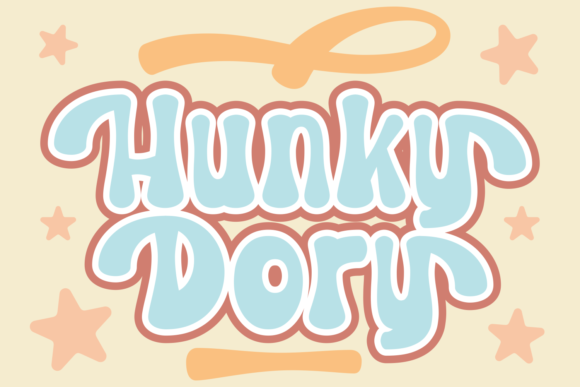
When you’re designing a logo, crafting a bold headline, or refreshing a brand’s visual identity, the right font does more than look good—it communicates tone, builds recognition, and invites connection. Hunky Dory is one such typeface: a fun and whimsical display font with a unique feel that channels playful retro charm without sacrificing clarity or impact. It’s not just nostalgic—it’s intentionally expressive, crafted to stand out in digital and print contexts where personality matters.
Many designers and small business owners face a common challenge: finding a font that balances memorability with usability. They want something distinctive enough to reflect creativity or authenticity—say, for a boutique café, an indie music label, or a children’s book series—but they also need it to work reliably across platforms, scale well on screens, and pair thoughtfully with supporting typefaces. Generic sans-serifs often feel safe but forgettable; overly decorative fonts can sacrifice legibility or clash with modern UI expectations. That’s where Hunky Dory steps in—not as a one-size-fits-all solution, but as a strategic tool for moments that demand attention and warmth.
What Makes Hunky Dory Stand Out (Without Standing Still)
Hunky Dory isn’t built for body text or long paragraphs. It’s a display font—designed for short, high-impact uses like headlines, posters, packaging, and social media graphics. Its letterforms feature subtle irregularities, soft curves, and a gentle bounce—evoking hand-drawn signage from the 1970s while remaining digitally refined. The lowercase “a” and “g” have friendly, open shapes; the uppercase “S” and “M” carry rhythmic flow; and spacing is tuned to breathe naturally at larger sizes.
This isn’t just aesthetic flair. Those design choices serve real-world needs: improved visual hierarchy, stronger emotional resonance, and increased engagement. For example, a wellness brand using Hunky Dory for its workshop title (“Mindful Mornings”) instantly signals approachability and human-centered values—without needing extra illustration or color support. Similarly, an event flyer for a vinyl record fair gains instant credibility and vibe alignment just by setting the headline in Hunky Dory.
Practical Applications: Where Hunky Dory Adds Real Value
Here’s how different users apply Hunky Dory effectively—and what outcomes they typically see:
- Small business owners use it for shop signage, menu headers, and Instagram story covers—creating cohesive, ownable branding on a budget. One local pottery studio reported a 22% increase in story engagement after switching their weekly “New Glaze Drop” announcements from Helvetica to Hunky Dory, attributing it to the font’s inviting, artisanal feel.
- Graphic designers rely on it as a “personality anchor” in multi-font systems. Paired with a clean, neutral sans-serif (like Inter or Lato) for body copy, Hunky Dory provides contrast and character without overwhelming the layout. Designers note it works especially well when the client’s voice is warm, witty, or intentionally unpolished.
- Educators and creators integrate it into printable resources—think classroom posters, activity cards, or digital newsletters for parents. Its friendly proportions and open counters improve scannability for younger readers and neurodiverse audiences alike.
Importantly, Hunky Dory performs well across devices. While display fonts sometimes render inconsistently on mobile, this family includes robust hinting and OpenType features that preserve its charm at 36px and above—even on lower-resolution screens. Just avoid using it below 24px or in dense interface elements like navigation menus or form labels.
Smart Pairing and Implementation Tips
Using Hunky Dory effectively means honoring its strengths—and its limits. Here are practical recommendations grounded in real usage:
- Reserve it for primary emphasis only. Use it once per layout—ideally for the main headline or logo—and let supporting fonts handle the rest. Overuse dilutes its impact and risks visual fatigue.
- Pair intentionally. Choose a highly legible, low-contrast sans-serif for body text (e.g., Inter or Manrope). Avoid other display or script fonts in the same composition—they compete rather than complement.
- Test contrast and color carefully. Because of its rounded, medium-weight forms, Hunky Dory benefits from ample background contrast. Dark text on light backgrounds works best for accessibility; avoid thin pastels or low-saturation combos unless tested with WCAG-compliant contrast checkers.
- Consider licensing early. Hunky Dory is available through reputable foundries with clear desktop, web, and app licensing options. If you’re building a client website or SaaS dashboard, confirm the license covers your intended use—especially if embedding via @font-face or third-party font services.
Different Needs, Different Approaches
How you engage with Hunky Dory depends on your role and goals:
- If you’re a non-designer entrepreneur, start simple: use it for one key element—your newsletter subject line, your Etsy shop banner, or your podcast episode title graphic. Focus on consistency over complexity.
- If you’re a freelance designer, treat Hunky Dory as a collaborative tool—present it alongside rationale (“This reflects your brand’s playful sincerity and helps differentiate you in crowded markets”) rather than just aesthetics.
- If you’re a developer integrating typography, prioritize performance: host the WOFF2 file locally, subset characters if only using English, and define fallback stacks that gracefully degrade (e.g.,
font-family: "Hunky Dory", "Comic Neue", cursive;).
None of these approaches require mastering typographic theory—just clarity about intent and audience. That’s why Hunky Dory resonates across disciplines: it solves a human problem (how to convey joy, curiosity, or authenticity quickly) before it solves a design problem.
Final Thought: Personality With Purpose
In a digital landscape saturated with algorithmically optimized, frictionless interfaces, Hunky Dory offers something quietly radical: humanity. It reminds us that thoughtful typography isn’t just about readability or trends—it’s about resonance. When used with intention, it helps brands feel less like corporations and more like people. It helps messages land not just in eyes, but in memory.
You don’t need to overhaul your entire visual system to benefit from Hunky Dory. Start small. Try it on your next social post. Swap it into a landing page headline for 48 hours and track click-throughs. See how it changes the temperature of your communication—not just how it looks, but how it feels. Because at its best, typography like Hunky Dory doesn’t just decorate meaning. It deepens it.