Marichan
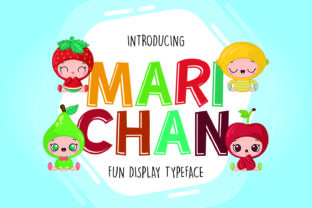
Marichan is a hand-drawn display font that balances playfulness and polish. Its rounded, slightly uneven letterforms—reminiscent of cheerful chalkboard writing or carefully inked doodles—carry warmth without sacrificing legibility at larger sizes. It’s not designed for body text or dense interfaces. Instead, Marichan thrives where tone matters as much as information: invitations, social media graphics, product packaging, classroom posters, blog headers, and brand touchpoints that aim to feel human, approachable, and intentionally light.
For professionals who regularly move between strategy and execution—whether launching a small business, designing a workshop deck, editing a YouTube thumbnail, or preparing a newsletter—the choice of typeface isn’t decorative window dressing. It’s part of the workflow itself. Marichan enters that process early—not as an afterthought, but as a deliberate signal about voice, audience, and intention. When you select Marichan, you’re making a quiet decision about how your message lands before a single word is read.
Where Marichan Fits in Real Workflows
Think of Marichan as a “tone anchor.” In planning phases—like sketching a campaign concept, drafting a pitch outline, or storyboarding a video—it helps clarify emotional direction. If your goal is to soften a technical topic (e.g., explaining tax basics for freelancers), using Marichan in early mockups signals that approachability is non-negotiable. That shapes copy choices, color palette decisions, and even image selection downstream.
During execution, Marichan works best when paired with a neutral, highly legible companion font—like Inter, Lato, or Open Sans—for supporting text. This pairing creates visual hierarchy *and* functional balance: Marichan draws attention and sets mood; the secondary font handles clarity and scanning. For example, a small business owner designing a seasonal menu might use Marichan for the dish title (“Sunshine Berry Parfait”) and Inter for ingredients and pricing. The contrast supports both delight and utility.
After delivery—whether it’s a printed flyer, an Instagram carousel, or a PDF workbook—Marichan continues to function. Its distinctiveness aids recognition. A recurring use of Marichan in your brand’s limited-edition announcements or student-facing materials builds subtle consistency over time, especially when applied with restraint. You don’t need it everywhere—just where warmth and memorability matter most.
Compatibility and Practical Integration
Marichan is available in standard OTF and TTF formats, making it compatible with Adobe Creative Cloud apps, Figma, Canva (via upload), Affinity Suite, and most desktop design tools. No plugins or workarounds are needed. That means minimal friction during active projects—no pausing to troubleshoot rendering issues or licensing confusion.
It’s also web-ready. When self-hosting or using a service like Google Fonts (if available via third-party hosting), embed Marichan with font-display: swap to avoid invisible text during load. For marketers embedding branded graphics in email campaigns, convert Marichan-based headlines to outlines or SVGs—preserving appearance without relying on client-side font loading.
One practical note: Marichan includes basic Latin characters, numerals, and punctuation. It does not support extended diacritics or complex scripts. If your project targets multilingual audiences beyond English, Spanish, or French, plan ahead—use Marichan only for primary branding elements and pair it with a robust system font for translated content.
Using Marichan Without Overuse
Whimsy gains impact through contrast and scarcity. Marichan shines brightest when used purposefully—not as default, but as punctuation. Consider these real-world applications:
- A freelance educator uses Marichan for worksheet titles (“Let’s Build a Budget!”) but keeps instructions and examples in a clean sans-serif—making the activity feel inviting while keeping steps scannable.
- A boutique coffee roaster applies Marichan to limited-run bag labels (“Honey Lavender Cold Brew Blend”) but sticks with a crisp geometric font for origin details and roast dates—balancing charm with credibility.
- A productivity blogger uses Marichan in Pinterest pin headers (“Your Calm-Morning Checklist ✨”) but reserves it for that single line—ensuring shareability without compromising readability on mobile feeds.
In each case, Marichan isn’t carrying the weight of communication. It’s amplifying intent. That’s how it avoids feeling childish or out of place—even for serious topics. The key is alignment: Does this moment benefit from softness? From a pause? From a smile? If yes, Marichan fits.
Workflow Tips for Consistent, Effective Use
Start with a style guide snippet. Even a simple internal note—“Marichan: Headings only. Max 3 words. Size ≥48pt. Color: #2E5A88 or #D97706”—prevents drift across team members or over time. Store it alongside your brand colors and logo usage rules.
Test at actual size and context. A Marichan headline may look charming at 72pt on your monitor—but shrink it to 24pt on a mobile screen, and letter spacing can collapse. Preview in final environments: email clients, print proofs, social previews. Adjust tracking manually if needed (slight expansion often helps).
Batch your Marichan assets. If you use it regularly—say, for weekly newsletter banners—create reusable Figma or Canva templates with pre-set styles, spacing, and safe zones. That saves decision fatigue and ensures visual rhythm across outputs.
Pair with intentional whitespace. Marichan’s organic shape benefits from breathing room. Avoid cramming it into tight containers or stacking it directly above dense text. Let it sit alone, centered, or floated with generous margins. That simplicity reinforces its effect.
Long-Term Use and Quality Control
Fonts age like any creative asset. What feels fresh in Year One can feel dated—or worse, inconsistent—if applied without reflection. Revisit your use of Marichan every 6–12 months. Ask: Does it still reflect who you are serving? Has your audience shifted? Is it still supporting clarity—or competing with it?
Also audit for technical debt. If you’ve used Marichan in dozens of Canva templates, check whether updates to the font file (e.g., new weights or glyphs) justify re-uploading and adjusting. Likewise, if you moved from desktop publishing to web-first delivery, confirm fallback fonts are defined and tested across devices.
Most importantly: Marichan should never override accessibility. Always maintain sufficient contrast (at least 4.5:1 against background), avoid justified alignment (which distorts its natural spacing), and never rely solely on color or font styling to convey meaning. Whimsy must coexist with inclusion.
Final Thought: Marichan as Intentional Design Language
Choosing Marichan isn’t about chasing cuteness. It’s about choosing to communicate with empathy first. In workflows where speed, scale, and automation dominate, Marichan offers a small, repeatable way to reintroduce humanity—without slowing things down. It works because it’s simple to implement, widely compatible, and emotionally precise.
Use it where tone needs lifting—not where precision needs masking. Apply it with awareness, not habit. And when in doubt, ask: Does this use make the message easier to receive, remember, or trust? If the answer is yes, Marichan has earned its place.