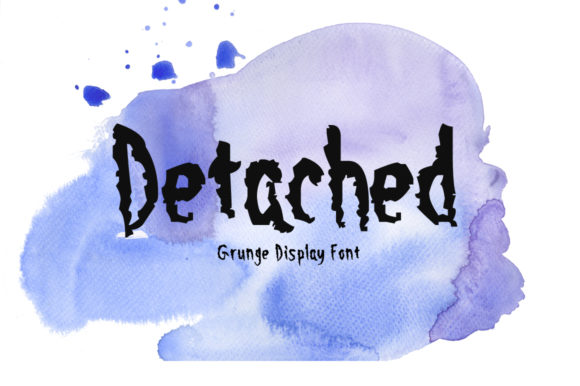
Cool Father: A Display Font with Strategic Personality
Cool Father isn’t just another display font—it’s a deliberate stylistic choice with tangible implications for how your message lands, who it resonates with, and what impression lingers. Designed with boldness and unmistakable personal charm, Cool Father occupies a rare space: expressive enough to command attention, yet grounded enough to feel intentional rather than decorative. For professionals who understand that typography is never neutral—especially in branding, marketing, publishing, or digital communication—Cool Father offers a distinct lever for shaping perception.
Why Personality Matters More Than Polishing
Many teams default to safe, highly legible fonts when launching a campaign, redesigning a website, or building brand assets. That safety often comes at a cost: indistinctiveness. Cool Father counters that by offering immediate visual character—not through gimmickry, but through confident proportions, subtle irregularities, and a hand-informed rhythm that feels human without sacrificing clarity at larger sizes. It doesn’t try to be everything; it tries to be *memorable*. And in crowded digital environments where attention is scarce and first impressions form in under 500 milliseconds, memorability isn’t decorative—it’s functional.
Where Cool Father Adds Real Leverage
- Brand Positioning: If your business or project leans into authenticity, warmth, or creative confidence—think indie publishers, boutique studios, educators building online courses, or small-batch product brands—Cool Father signals alignment before a single word is read. It subtly tells your audience, “This isn’t corporate-by-default. This has voice.”
- Editorial Hierarchy: Used selectively for headlines, section titles, or pull quotes, Cool Father creates strong visual anchors without demanding full-body readability. Its contrast with clean sans-serifs (like Inter, Helvetica Neue, or even Roboto) builds rhythm and hierarchy—guiding the eye while reinforcing tone.
- Digital Presence Curation: On landing pages, portfolio sites, or email headers, Cool Father helps differentiate your visual language from algorithmically homogenized templates. It supports intentionality—not just “looking nice,” but signaling a specific kind of creator mindset.
Using Cool Father Intentionally—Not Just Impressively
Typography gains strategic value only when aligned with purpose—not aesthetics alone. Cool Father works best when its use answers clear questions: What feeling should this headline evoke? Who needs to feel invited—or challenged—by this visual cue? What does consistency look like across touchpoints?
For example, a freelance educator launching a newsletter on creative problem-solving might use Cool Father for the subject line (“Your Brain Isn’t Broken—It’s Underused”) paired with a restrained serif for body text. That pairing doesn’t just look balanced—it communicates dual values: approachability (via Cool Father’s charm) and credibility (via the serif’s tradition). The font becomes part of the argument, not just its wrapper.
Practical Planning Tips
- Start with context, not character count. Before selecting Cool Father for a headline, ask: Is this moment meant to provoke, reassure, celebrate, or clarify? Cool Father excels at the first three—but falters if clarity is the sole priority (e.g., legal disclaimers or complex instructions).
- Test at real scale and weight. Cool Father’s boldness can overwhelm if over-applied. Preview it at actual usage size—not just in a font menu. At 48px on desktop, it sings. At 16px on mobile, it stumbles. Reserve it for moments where size and placement give it room to breathe.
- Pair deliberately—not decoratively. Avoid stacking display fonts. Cool Father pairs most effectively with neutral, highly legible typefaces: a crisp geometric sans-serif for UI labels, a warm humanist sans for body copy, or a classic serif for long-form content. The contrast does the work—not the similarity.
- Consider loading and fallbacks. As a display font, Cool Father shouldn’t carry body text. Ensure your web implementation uses
@font-facewith appropriatefont-display: swap, and define robust system-font fallbacks. Performance and accessibility aren’t secondary concerns—they’re prerequisites for Cool Father to succeed.
Risks of Misalignment—And How to Avoid Them
Cool Father becomes counterproductive when used without grounding in audience or objective. Deploying it across all headings in a financial services dashboard, for instance, risks undermining trust—its charm may read as unserious where precision and stability matter most. Similarly, applying it to multilingual interfaces without testing diacritics or extended character sets can fracture usability for non-English readers.
Another common misstep: using Cool Father to mask weak messaging. A bold font won’t compensate for vague value propositions, inconsistent voice, or unclear calls to action. In fact, it can amplify those gaps—drawing attention to ambiguity instead of resolving it. Cool Father amplifies intent; it doesn’t substitute for it.
When to Pause—and Choose Differently
Reconsider Cool Father if:
- Your primary audience prioritizes speed, efficiency, or neutrality over personality (e.g., enterprise SaaS dashboards, internal operations tools, regulatory documentation);
- You lack control over typographic execution—such as in third-party platforms with limited CSS access or rigid template constraints;
- Your brand voice is intentionally minimalist, austere, or technocratic—where Cool Father’s warmth would create dissonance rather than resonance;
- You’re unable to commit to consistent application—using it once on a homepage banner and never again dilutes its impact and confuses visual recognition.
Long-Term Value Lies in Consistency, Not Novelty
Cool Father’s utility compounds over time—not because it’s trendy, but because it supports recognizability. When used consistently across key touchpoints (a podcast logo, keynote slides, workshop handouts, social banners), it begins functioning like a visual signature. That consistency builds associative strength: people don’t just remember your message—they begin to recognize your tone at a glance.
This isn’t about repetition for its own sake. It’s about recognizing that Cool Father contributes to what designers call “perceptual fluency”—the ease with which people process and recall information tied to familiar visual cues. Brands that master this don’t chase virality; they build familiarity. And familiarity, backed by substance, converts more reliably than novelty ever will.
A Final Strategic Note
Cool Father invites you to make a choice—not just about appearance, but about positioning. Every time you apply it, you’re answering a quiet question: “What kind of presence do I want to hold here?” That question matters most when stakes are high: launching a new service, repositioning after market shifts, communicating change to long-standing clients, or distinguishing yourself in saturated niches.
So treat Cool Father like a tool with defined parameters—not a magic wand. Use it where personality strengthens strategy, where charm supports clarity, and where boldness serves purpose. Don’t reach for it because it’s interesting. Reach for it because it makes your next decision—about voice, audience, or outcome—more coherent, more confident, and more human.