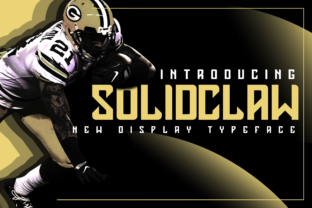
Solidclaw: A Strategic Display Font for Impactful Visual Communication
Solidclaw is not just another bold typeface—it’s a deliberate design decision with functional consequences. Designed as a display font, Solidclaw delivers high visual contrast, strong geometric structure, and an unmistakable sense of presence. Its sharp angles, confident weight distribution, and tightly tuned spacing make it ideal for moments where clarity, authority, and memorability matter most. For professionals who shape messages—whether launching a brand, designing a presentation, publishing content, or refining a customer touchpoint—Solidclaw offers more than aesthetics. It offers leverage.
Why Solidclaw Fits Real-World Strategy (Not Just Style)
Typography influences perception before a single word is read. Solidclaw’s power lies in its ability to signal intention: confidence without aggression, modernity without coldness, distinction without distraction. That matters when you’re competing for attention in crowded digital spaces—or trying to reinforce trust during critical interactions like sales pages, keynote slides, or product packaging.
Unlike system fonts or overused sans-serifs, Solidclaw stands apart precisely because it’s not neutral. That’s its strategic advantage—and its constraint. Used well, it strengthens positioning. Used carelessly, it undermines credibility. The difference isn’t technical—it’s intentional. Solidclaw works best when aligned with clear communication goals: drawing focus to a headline, anchoring a brand voice, or creating visual rhythm in a layout where hierarchy must be instantly legible.
Where Solidclaw Delivers Measurable Value
Consider these practical applications where Solidclaw supports outcomes—not just decoration:
- Brand identity systems: When paired with a simpler, highly legible body font (like a well-chosen serif or humanist sans), Solidclaw becomes the “voice” of your logo, app icon, or hero section—reinforcing differentiation without sacrificing coherence.
- Presentation decks and pitch materials: Decision-makers scan quickly. Solidclaw headlines create instant visual anchors—helping audiences grasp structure and priority in under three seconds.
- Digital ads and social banners: On small screens or fast-scrolling feeds, Solidclaw’s strong letterforms retain impact at smaller sizes where many display fonts blur or collapse.
- Printed collateral with limited real estate: Trade show banners, event signage, or product labels benefit from Solidclaw’s ability to command space efficiently—no extra words needed to convey weight or urgency.
Notice what’s missing from that list: body text, long-form articles, data tables, or interfaces requiring frequent reading. Solidclaw isn’t built for those jobs—and trying to force it there weakens both usability and trust.
How to Use Solidclaw With Purpose—Not Habit
Start by asking: What outcome do I need this text to support? If the answer is “grab attention,” “signal premium quality,” or “reinforce brand consistency across touchpoints,” Solidclaw may be appropriate. If the answer is “ensure readability over time” or “support scanning dense information,” it likely isn’t.
Here’s how to apply that thinking:
- Define the role first: Is this a headline? A logo lockup? A call-to-action button label? Solidclaw excels in roles where brevity and emphasis intersect.
- Test contrast and context: Drop Solidclaw into your actual layout—not just a mockup. Does it hold up against background textures, photography, or adjacent UI elements? Does it compete with imagery instead of complementing it?
- Pair deliberately: Avoid pairing Solidclaw with other high-contrast display fonts. Instead, choose a body font with generous x-height, open counters, and clear letter distinction—something that breathes beside Solidclaw’s intensity.
- Limit scope: One or two uses per project is often enough. Overuse dilutes impact and risks visual fatigue. Think of Solidclaw like a well-placed accent light—not ambient lighting.
Risks of Using Solidclaw Without Strategic Alignment
The biggest risk isn’t technical—it’s misalignment. Solidclaw communicates certainty. If your brand voice is intentionally warm, conversational, or exploratory, Solidclaw can unintentionally signal rigidity or distance. Similarly, using Solidclaw in contexts where users expect familiarity—like government forms, educational handouts, or accessibility-first interfaces—can introduce friction rather than clarity.
Another common pitfall: treating Solidclaw as a shortcut for “looking professional.” Real professionalism shows in consistency, appropriateness, and user-centered choices—not font novelty. A startup using Solidclaw for every heading on its website may appear confident—but if visitors struggle to parse navigation or misread key information, confidence becomes noise.
Also consider licensing and implementation. Solidclaw is a commercial font. Using it without proper licensing—even in internal presentations or prototypes—exposes teams to legal and reputational risk. Always verify usage rights before embedding, exporting, or sharing files containing Solidclaw.
Planning Ahead: When to Choose (or Skip) Solidclaw
Before selecting Solidclaw, ask three questions:
- Is the message short, high-stakes, and visually isolated? (e.g., a landing page headline, a conference stage banner, a product name on packaging). If yes, Solidclaw is worth prototyping.
- Does the audience associate bold, structured typography with credibility in this context? In tech, finance, or design-forward industries, yes. In healthcare, education, or community-based services, proceed with caution—and test with real users.
- Can we commit to consistent, limited use across all channels? If Solidclaw appears on your website but not your email templates—or appears in your sales deck but not your investor one-sheet—it creates fragmentation, not branding.
When those conditions aren’t met, consider alternatives: a refined grotesque with strong uppercase variants, a carefully spaced geometric sans, or even a custom lettermark derived from your existing brand assets. Solidclaw isn’t always the answer—but knowing why it might be (or might not be) is what separates thoughtful design from decorative habit.
Long-Term Value: Beyond the First Impression
Solidclaw’s durability comes from its restraint—not its flair. Fonts that last aren’t the flashiest; they’re the most reliably functional within defined boundaries. Solidclaw gains long-term value when treated as a strategic tool: deployed only where its strengths directly serve user needs and business goals.
That means revisiting its use annually—not just as a visual refresh, but as part of broader brand health checks. Does Solidclaw still reflect how your audience perceives you? Has your messaging shifted toward collaboration over authority—or simplicity over distinction? If so, your typography should shift too. Solidclaw remains valuable not because it’s permanent, but because it’s precise. Precision requires ongoing calibration.
For creators building assets meant to endure—brand guidelines, design systems, presentation templates—Solidclaw earns its place when documented with clear usage rules: size ranges, color contrast minimums, prohibited pairings, and fallback options for environments where it can’t load. That documentation isn’t bureaucracy—it’s foresight.
Final Thought: Typography as Decision-Making Infrastructure
Solidclaw is more than a download. It’s a node in your communication infrastructure—connected to voice, audience expectations, platform constraints, and long-term brand equity. Choosing it thoughtfully means recognizing that every font choice participates in shaping how people understand, remember, and act on your message.
So don’t ask, “Does Solidclaw look cool?” Ask, “Does Solidclaw help my audience get where they need to go—faster, clearer, and with more confidence in what they’re seeing?” When the answer is yes, Solidclaw earns its place. When it’s uncertain, pause. Refine the goal first. Then choose—not the boldest option, but the right one.