Dadung Font: A Minimalist Display Typeface That Adds Smart Charm to Any Design
What Is Dadung — and Why Does It Stand Out?
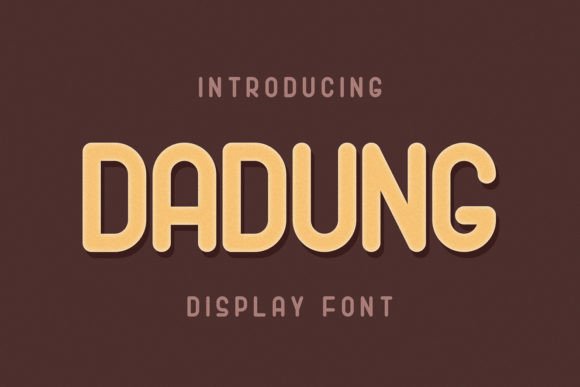
Dadung is a contemporary display font designed with intentional simplicity and quiet confidence. Unlike bold, decorative typefaces that shout for attention, Dadung speaks softly — yet memorably. With clean lines, balanced proportions, and subtle rounded terminals, it embodies a minimalist aesthetic while retaining warmth and approachability. Created for visual impact at larger sizes, Dadung thrives in headings, logos, posters, and digital interfaces where clarity and personality matter equally.
Its name evokes lightness and playfulness — fitting for a font that feels both modern and timeless. Though classified as a display typeface (meaning it’s optimized for short bursts of text rather than long paragraphs), Dadung’s thoughtful spacing and open letterforms allow it to scale gracefully across devices and contexts — from mobile app banners to printed packaging and social media graphics.
The Purpose Behind the Simplicity
At its core, Dadung serves a dual purpose: enhancing readability and evoking emotional resonance. In an era saturated with visual noise, minimalist fonts like Dadung act as visual anchors — guiding the eye without overwhelming it. Its smart feel doesn’t come from complexity, but from precision: consistent stroke widths, gentle curves, and carefully calibrated x-heights ensure legibility even at smaller display sizes.
This makes Dadung especially valuable for brands and creators aiming to communicate trust, innovation, or calm sophistication. For example, a wellness startup might use Dadung in its app header to convey clarity and intention; an indie bookstore could feature it on seasonal event posters to suggest thoughtfulness and charm. Its versatility lies not in stylistic extremes, but in restrained elegance.
Where Dadung Fits in Modern Design Ecosystems
Dadung doesn’t exist in isolation — it responds meaningfully to current design trends and real-world needs:
- Digital-first communication: With rising demand for fast-loading, responsive web assets, lightweight, well-hinted fonts like Dadung improve performance without sacrificing aesthetics.
- Brand differentiation: In crowded markets — from edtech platforms to artisanal food labels — a distinctive yet understated typeface helps brands stand out without seeming gimmicky.
- Inclusive design practices: Dadung’s generous letter spacing and clear character shapes support readability for diverse audiences, including readers with mild visual processing differences.
- Cross-platform consistency: Whether rendered on iOS, Android, or desktop browsers, Dadung maintains its integrity — a crucial advantage for unified brand experiences.
Practical Uses: From Concept to Execution
Understanding *what* Dadung is matters less than knowing *how* and *when* to use it effectively. Here are real-world applications that highlight its strengths:
1. Logo & Identity Systems
Because of its strong visual presence and neutral-yet-characterful tone, Dadung works beautifully in wordmark logos. Its lowercase “a” and “g” offer subtle uniqueness without compromising recognition — ideal for startups wanting to appear both human-centered and forward-thinking.
2. Editorial & Social Media Graphics
Blog headers, Instagram quote cards, and newsletter banners benefit from Dadung’s ability to balance visual weight and breathing room. Pair it with a clean sans-serif like Inter or Lato for body text, and you create hierarchy that feels intuitive — not forced.
3. Product Packaging & Merchandise
On physical goods — think ceramic mugs, tote bags, or candle labels — Dadung’s minimalist structure translates cleanly into screen printing and embossing. Its lack of fine serifs or delicate flourishes ensures crisp reproduction, even at small scales.
4. Presentations & Educational Materials
Educators and corporate trainers increasingly prioritize slide decks that feel inviting rather than intimidating. Dadung’s friendly geometry makes complex topics feel more accessible — especially when used for section titles or key takeaways.
Common Misconceptions About Minimalist Fonts Like Dadung
Despite growing popularity, minimalist display fonts often face misunderstandings. Let’s clarify a few:
- “Minimalist = boring.” Not true. Minimalism in typography is about removing distraction — not personality. Dadung’s slight curvature and rhythmic spacing give it quiet expressiveness.
- “It only works for ‘cute’ or ‘playful’ brands.” While Dadung does carry warmth, its structural discipline makes it equally effective for tech firms, academic institutions, or healthcare providers seeking clarity over coldness.
- “You can substitute any rounded sans-serif.” Fonts like Nunito or Quicksand share some traits, but Dadung’s unique proportions, spacing logic, and optical tuning set it apart. Substitution risks losing nuance — and impact.
- “It’s just for headlines — no utility elsewhere.” Creative designers successfully use Dadung in button labels, app navigation bars, and even animated micro-interactions where legibility and tone must align instantly.
How Dadung Supports Creativity — Without Overwhelming It
One of Dadung’s quiet superpowers is how it empowers creators instead of dictating to them. Because it doesn’t impose heavy stylistic baggage, it invites thoughtful pairing and contextual adaptation. A designer working on a climate advocacy campaign might layer Dadung over textured photography to soften urgency with sincerity. A UX writer might use it sparingly in empty-state illustrations to add empathy without clutter.
This flexibility stems from its foundation in typographic fundamentals: strong contrast between thick and thin strokes (though subtle), harmonious letterfitting, and language-agnostic glyph coverage. It supports Latin, Vietnamese, and extended Latin characters — making it practical for global-facing projects without requiring fallback fonts.
Getting Started With Dadung: Tips for Beginners and Pros Alike
Whether you're new to typography or refining your design system, here’s how to integrate Dadung thoughtfully:
- Start with hierarchy: Use Dadung exclusively for primary headlines (H1, H2) and key UI elements. Avoid body copy — its display nature isn’t optimized for extended reading.
- Respect whitespace: Dadung shines when given room to breathe. Increase line-height slightly in CSS (
line-height: 1.3;) and avoid tight letter-spacing unless intentionally stylized. - Test across contexts: View your design on multiple screens and in print mockups. Dadung’s subtlety means it can recede if competing with busy backgrounds — try subtle drop shadows or solid color overlays for contrast.
- Pair wisely: Complement Dadung with a highly legible, neutral sans-serif (e.g., Manrope, IBM Plex Sans, or Open Sans). Avoid other display fonts unless deliberately creating contrast.
- License responsibly: Dadung is available under open-source licenses (check the official repository). Always verify usage rights for commercial projects — especially if modifying or embedding in apps.
Why Dadung Matters Beyond Aesthetics
In a world accelerating toward algorithmic content and AI-generated visuals, human-crafted typefaces like Dadung remind us of intentionality. Every curve, every kerning adjustment, every decision to simplify rather than embellish reflects care — for the reader, the message, and the medium. That’s why designers, educators, and entrepreneurs alike turn to fonts like Dadung: not just to look good, but to feel right.
It represents a shift — away from visual excess and toward resonant minimalism. And in doing so, Dadung doesn’t just decorate ideas. It clarifies them. It welcomes attention. It adds a smart, sincere feel to any design idea — quietly, confidently, and with unmistakable charm.
If you’re exploring typography for your next project, consider what Dadung offers beyond style: a thoughtful tool for meaningful communication. And sometimes, the most powerful statements are made not with volume — but with clarity.