Foxiest: A Light, Modern Display Font
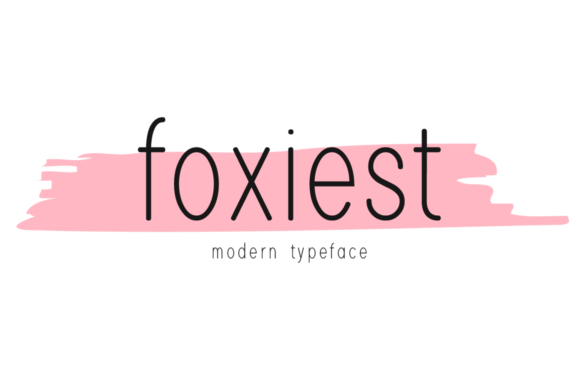
Foxiest is a friendly, contemporary display font designed for clarity and charm—not loudness or complexity. It’s not meant for body text or code editors. Instead, Foxiest shines where personality meets purpose: headlines, logos, social graphics, greeting cards, presentation slides, and short-form web banners. Its letterforms balance soft curves with crisp geometry—think rounded terminals on lowercase a and e, generous x-height, and subtle contrast that keeps it legible even at smaller display sizes.
Why a Display Font Like Foxiest Matters—Depending on Who You Are
What makes Foxiest useful isn’t universal—it shifts meaning based on your role, goals, and context. A graphic designer evaluating fonts for a client’s rebrand cares about tone alignment and licensing flexibility. A teacher building a classroom newsletter wants something joyful but readable for kids and parents alike. A small bakery owner updating their Instagram stories needs quick visual cohesion—not technical setup time. And a freelance writer designing their own portfolio site might prioritize how Foxiest pairs with a clean sans-serif for headings versus paragraphs.
For Beginners and Hobbyists
If you’re just starting out in Canva, Google Slides, or Figma, Foxiest lowers the barrier to polished-looking work. You don’t need typography training to see that its light weight and open shapes feel approachable—not stiff or corporate. Try it on a handmade recipe card, a birthday invitation, or a blog post title. No kerning adjustments needed; no font pairing stress. It works well against soft pastel backgrounds or crisp white space. Just type, preview, and go. That simplicity matters when you're learning—not optimizing.
For Educators and Content Creators
Educators often juggle limited design time with high visual expectations—from lesson slide decks to student-facing handouts. Foxiest supports engagement without distraction. Its gentle rhythm helps young readers track words, while its modern look signals relevance to older students. One middle school science teacher uses Foxiest for “Key Concept” headers in her digital worksheets—students report they “feel less like homework, more like discovery.” Similarly, podcasters or YouTubers use it in thumbnail text because it stands out clearly at small sizes on mobile feeds—no pixelation, no thin strokes vanishing into the background.
For Freelancers and Small Business Owners
When you’re wearing ten hats—including designer—you need fonts that deliver consistency *and* speed. Foxiest comes in one clean weight (Light) with full Latin character support, including basic diacritics. That means fewer decisions, faster exports, and reliable rendering across browsers and devices. A wedding photographer uses it exclusively for client gallery titles—its warmth matches her brand voice better than sharp, high-contrast alternatives. A local bookstore owner applies it to event posters and email headers, finding it bridges “literary” and “inviting” without leaning too playful or too formal.
For Design Professionals and Developers
Experienced designers appreciate Foxiest not as a Swiss Army knife—but as a considered tool. Its spacing is optimized for display use, so it doesn’t require manual tracking tweaks in most cases. Developers integrating it via Google Fonts will find it lightweight (under 40 KB), with fast load times and excellent variable-font compatibility. It’s also licensed for commercial use—including SaaS dashboards and client websites—without hidden fees or attribution requirements. One UI designer chose Foxiest for a wellness app’s onboarding screens because its softness reduced perceived cognitive load during first-time setup—users paused less, scrolled more.
What Foxiest Is Not—And Why That’s Helpful
Foxiest isn’t a text font. It won’t serve you well in long paragraphs, dense reports, or accessibility-critical interfaces where WCAG contrast and readability testing are non-negotiable. It’s not a variable font with optical sizing or width axes—so if your project demands granular typographic control across responsive breakpoints, you’ll want to pair it thoughtfully (e.g., with Inter or Open Sans for body copy). And while it supports English, Spanish, French, and German out of the box, extended Cyrillic or Arabic language coverage isn’t included.
How to Tell If Foxiest Fits Your Project
Ask yourself a few practical questions before adding Foxiest to your toolkit:
- Is this for a headline, logo, button label, or short visual phrase? → Yes? Foxiest is likely a strong candidate.
- Do you value ease over exhaustive customization? → Yes? Its single-weight simplicity saves time.
- Does your audience respond well to warmth and lightness—not authority or tradition? → Yes? Foxiest’s vibe aligns.
- Are you embedding it on a public website or app? → Yes? It’s hosted reliably via Google Fonts with no self-hosting overhead.
- Is budget or licensing a concern? → No problem—it’s free for personal and commercial use, with clear, permissive terms.
A Few Real Pairings That Work Well
Foxiest gains strength through contrast. Here’s how real users combine it:
- A children’s illustrator pairs Foxiest with Quicksand for book cover titles—soft meets softer, both highly legible.
- A tech startup uses Foxiest for feature announcement banners, then switches to JetBrains Mono for inline code snippets—clarity layered with personality.
- A nonprofit’s annual report uses Foxiest for section headers (“Our Impact in 2024”) alongside Lora for narrative text—modern energy balanced with trusted gravitas.
None of these pairings are rules—just reflections of intention. Foxiest doesn’t demand attention; it invites it gently. That makes it unusually versatile for people who care about tone but don’t have hours to fine-tune letter spacing or test 17 font weights.
Final Thought: Typography as Quiet Confidence
Foxiest doesn’t shout. It doesn’t mimic trends or chase novelty. What it offers instead is quiet confidence—a font that says, “This matters, and it’s worth presenting well,” without needing explanation. Whether you’re a student designing their first portfolio, a marketer refreshing a landing page, or a developer adding final polish to a dashboard, Foxiest supports your message—not competes with it. Its lightness isn’t emptiness. It’s space for your idea to land clearly, kindly, and memorably.