Fundstueck: A Playful Display Font for Contemporary Creative Projects
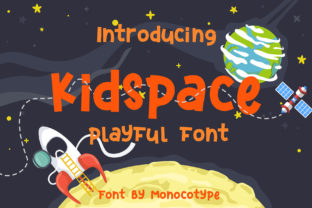
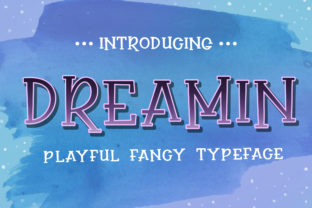
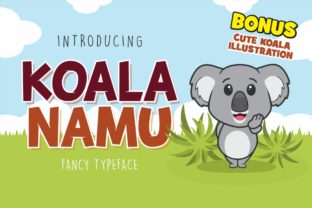
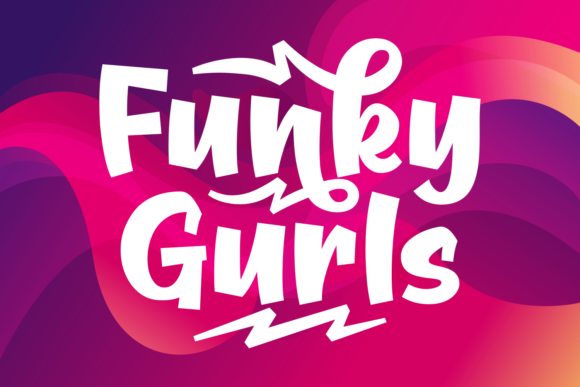
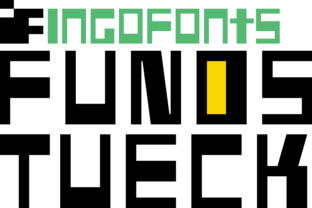
Fundstueck is a distinctive display typeface designed with expressive, hand-crafted energy. It features irregular strokes, subtle asymmetry, and a slightly uneven baseline—qualities that lend it a lively, humanist character. Unlike text fonts intended for extended reading, Fundstueck is optimized for short-form, high-impact applications: headlines, logos, posters, packaging, and digital banners. Its design intentionally avoids rigid geometry, favoring visual rhythm and personality over uniformity.
Why Consider Fundstueck?
Designers often seek typefaces that reinforce brand voice or elevate a project’s emotional tone. Fundstueck appeals to those prioritizing expressiveness and modern informality. Its playful nature makes it relevant for audiences valuing authenticity, creativity, or youth-oriented messaging—such as independent publishers, boutique studios, lifestyle brands, or event organizers aiming for a fresh, approachable identity.
It stands out in contexts where conventional sans serifs or geometric display fonts feel overly polished or generic. If your goal is to signal spontaneity, warmth, or artistic confidence—not neutrality or authority—Fundstueck offers a stylistic alternative grounded in deliberate imperfection.
Practical Benefits and Realistic Expectations
Fundstueck performs well at larger sizes (typically 36pt and up), where its idiosyncrasies become assets rather than distractions. Its letterforms have sufficient contrast and spacing to maintain legibility in headlines and signage, especially when used against clean backgrounds. The font includes standard Latin characters, numerals, and basic punctuation, supporting most Western European languages.
However, expectations should align with its purpose. Fundstueck is not suitable for body text, UI interfaces, or dense editorial layouts. Its irregular proportions reduce readability below ~24pt, and screen rendering—particularly on lower-resolution devices—may soften fine details. Users should test it across target platforms (web, print, mobile) before final implementation.
Another consideration: licensing. Fundstueck is typically available through independent foundries or curated font marketplaces. Licensing models vary—some offer web-only, desktop-only, or bundled options. Always verify permitted use cases (e.g., embedding in apps or PDFs) and ensure compliance with the vendor’s terms.
When Fundstueck Fits Well
Fundstueck shines in projects where typography functions as a visual accent rather than a neutral carrier of information. Examples include:
- Brand identity systems seeking a memorable, non-corporate headline treatment—especially for creative agencies, art collectives, or craft-based businesses.
- Event promotion, such as music festivals, gallery openings, or workshops, where energy and individuality support the theme.
- Social media visuals and digital ads where bold, scroll-stopping presence matters more than typographic subtlety.
- Editorial covers or magazine spreads where a single headline dominates the composition and benefits from expressive weight.
In these cases, pairing Fundstueck with a highly legible, restrained text font (e.g., a neutral sans serif like Inter or a warm humanist like Lora) creates effective visual hierarchy without competing tones.
When to Explore Alternatives
Fundstueck may not serve projects requiring broad accessibility, formal tone, or multi-language support. For instance:
- Government, academic, or healthcare communications benefit from clarity and trustworthiness—qualities better supported by highly legible, tested typefaces like Roboto, Source Sans Pro, or Merriweather.
- Global or multilingual branding may need extended character sets (Cyrillic, Greek, Vietnamese, etc.) that Fundstueck does not currently provide. Fonts like Poppins or Noto Sans offer wider language coverage with similar contemporary appeal.
- Projects emphasizing minimalism or precision—such as tech startups focused on data or finance—often align better with crisp, rational typefaces like IBM Plex Sans or Helvetica Now.
- Long-form digital content demands responsive, accessible web fonts. While Fundstueck can be loaded via
@font-face, its file size and lack of variable axes may impact performance compared to lightweight, variable alternatives.
Making an Informed Choice
Evaluating Fundstueck requires matching its strengths to your specific constraints and goals. Start by clarifying three things:
- What role does typography play? If it’s primarily decorative or atmospheric, Fundstueck is worth testing. If it must convey complex information efficiently—or accommodate diverse users—prioritize functional fonts first.
- Where will it appear? Print mockups and high-DPI screens reveal Fundstueck’s texture best. Low-resolution displays or small mobile viewports may obscure detail; preview real-world usage early.
- What’s your workflow capacity? Does your team have time to adjust kerning manually? Are developers prepared to handle custom font loading and fallback strategies? Fundstueck’s irregular spacing sometimes requires fine-tuning in design tools or CSS.
Also consider testing with actual content—not just “Lorem ipsum.” Try setting real headlines, product names, or taglines. Does the rhythm support meaning, or does it distract? Ask colleagues or target users for quick feedback on tone and clarity. Perception varies: one viewer may read “friendly,” another “unpolished.” That variance is inherent—and intentional—but should align with your intent.
Final Thoughts
Fundstueck is a specialized tool, not a universal solution. Its value lies in its ability to inject character into moments where typography is meant to be seen, felt, and remembered—not merely read. It reflects a broader shift toward expressive, context-aware type use in digital and print design. Yet its effectiveness depends entirely on fit: between aesthetic intention and practical requirement, between creative ambition and technical reality.
If your project calls for immediacy, warmth, and a break from typographic convention—and you’ve confirmed compatibility with your medium, audience, and production pipeline—Fundstueck merits serious evaluation. If consistency, scalability, or broad usability are higher priorities, other display or text fonts may better serve your needs. As with any type choice, the strongest decision emerges not from trend awareness alone, but from alignment with purpose, audience, and execution reality.