Good Vibration: Bold Brush Font with Urban Energy
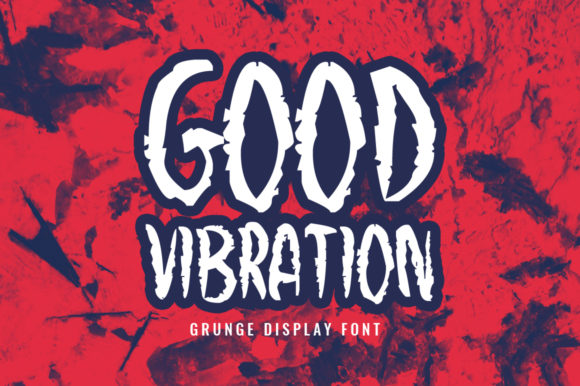
Good Vibration isn’t just another script font—it’s a confident, hand-drawn brush typeface that balances raw expressiveness with clean readability. Designed from scratch for today’s digital and print needs, it brings the spontaneity of ink-on-paper energy into modern design workflows—without sacrificing versatility or polish.
What Makes Good Vibration Stand Out?
At its core, Good Vibration is a brush font with intentional weight, rhythm, and attitude. Unlike delicate calligraphy fonts, it leans into bold strokes, subtle texture, and a slightly uneven baseline—giving it an authentic, urban pulse. The letters feel alive: energetic but controlled, casual but professional.
Its “urban twist” shows up in smart details—like sharp entry/exit flicks on uppercase letters, generous x-height for legibility at smaller sizes, and carefully tuned spacing that keeps words breathing naturally. It’s not overly decorative, so it doesn’t overwhelm layouts. And because it’s built as a full-featured OpenType font, it includes standard ligatures, alternate characters, and multilingual support (including Latin Extended-A), making it practical for real-world use.
Who Benefits Most From This Font?
If you’ve ever struggled to find a handwritten-style font that feels fresh—not childish, not cliché, not too busy—Good Vibration fills that gap. It resonates especially well with creators who value personality *and* professionalism:
- Small business owners launching a new brand identity—think coffee shops, boutiques, or wellness studios wanting warmth without looking generic.
- Bloggers and content creators adding visual distinction to headlines, social graphics, or email banners without needing design expertise.
- Educators and workshop facilitators designing handouts or presentation slides that feel approachable yet intentional.
- Freelancers and marketers building client-facing assets—like Instagram carousels, event posters, or product packaging—where tone matters as much as clarity.
It’s also a favorite among designers who appreciate how easily Good Vibration pairs with neutral sans-serifs (like Inter, Poppins, or Montserrat) for balanced, contemporary contrast—making hierarchy clear while keeping things human-centered.
Real-Life Uses You Can Try Today
You don’t need advanced tools or years of experience to get great results. Here are simple, effective ways people are already using Good Vibration:
- Instagram story headers—a short phrase like “New Drop Live Now” gains instant character when set in Good Vibration over a muted background.
- Workshop name badges—printed on kraft paper or matte cardstock, the font’s texture adds tactile charm without looking unpolished.
- Email newsletter subject lines—even rendered as web-safe fallback text, its strong letterforms translate well across devices.
- Product labels for handmade goods—soap bars, candles, or ceramic mugs benefit from its artisanal-but-confident voice.
- Slide deck titles in Google Slides or Keynote—it scales cleanly and avoids the “clip-art” look common with overused script fonts.
One small business owner recently used Good Vibration for her local yoga studio’s summer retreat poster—pairing it with soft blues and minimalist line art. She told us, “People kept saying, ‘It feels like me—but better.’ That’s exactly what I wanted.”
Things to Keep in Mind Before You Use It
Like any expressive font, Good Vibration shines brightest when used thoughtfully—not everywhere, but where it counts. Here’s what helps ensure success:
- Reserve it for display use. While highly legible at 24pt and above, it’s not designed for long paragraphs or body text. Think headlines, logos, quotes, buttons—not essays or legal disclaimers.
- Test contrast and color carefully. Its brush texture works best against solid, non-distracting backgrounds. Avoid placing it over busy photos or low-contrast gradients unless you’re intentionally going for a layered, grunge-inspired effect.
- Watch your kerning in all-caps settings. Uppercase combinations like “THE” or “BEST” can sometimes feel tight. Most design apps let you adjust spacing manually—or simply switch to title case for more natural flow.
- Check licensing early. Good Vibration is available for personal and commercial use, but make sure your license covers your intended application—especially if you’re embedding it in apps, websites (via @font-face), or selling templates that include the font.
Also worth noting: because it’s a relatively new release, you won’t find it pre-installed on most systems. That means sharing editable files (like .PSD or .AI) with collaborators or clients may require you to embed the font or provide instructions for installation—something to plan for ahead of time.
Why It Fits So Well With Today’s Creative Needs
We’re seeing a quiet shift in design preferences—away from hyper-polished perfection and toward authenticity with intention. People respond to work that feels made by humans, not algorithms. Good Vibration supports that shift without asking you to sacrifice clarity or consistency.
It’s also lightweight in file size and compatible across platforms (macOS, Windows, Linux, and even many web-based editors). Whether you're sketching ideas in Figma, designing in Canva, or prepping files for a local print shop, it integrates smoothly—no plugins or workarounds needed.
And because it’s built with real-world usage in mind, it avoids extremes: no excessive swashes that distract, no fragile thin strokes that vanish on screen, no inconsistent weights that limit flexibility. It’s confident, consistent, and quietly versatile.
If you've been holding off on trying a brush font because past options felt either too stiff or too chaotic, Good Vibration might be the one that clicks. It doesn’t ask you to become a typographer overnight—it invites you to add voice, warmth, and presence to your work, right where it matters most.