Stickitout: Urban Display Font with Bold Character
When your headline needs to stop scrolling thumbs, command attention in a crowded feed, or anchor a brand identity with unmistakable personality—Stickitout delivers more than visual impact. It’s not just another display font. It’s a carefully crafted typographic voice built for clarity, contrast, and urban authenticity—designed to resonate with audiences who value both substance and style.
What Makes Stickitout Stand Out (Beyond the Aesthetics)
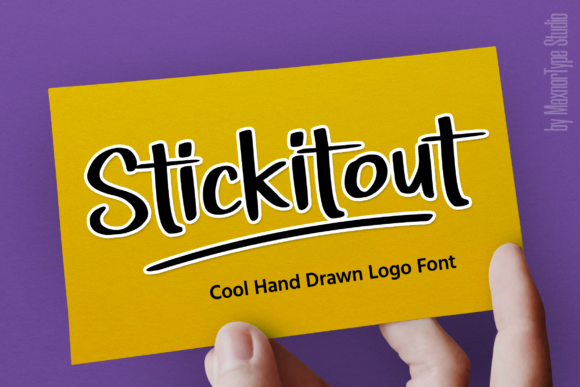
At its core, Stickitout is a high-contrast, geometric display typeface that balances raw edge with refined structure. Its letterforms feature subtle angular tension—sharp terminals, confident strokes, and intentional irregularities that echo hand-painted signage, subway posters, and street-level typography. Unlike overly stylized fonts that sacrifice legibility at scale, Stickitout maintains strong readability even in tight layouts or on smaller screens when used appropriately.
What sets it apart isn’t just how it looks—it’s how it functions. Each weight includes extended language support, OpenType features like stylistic alternates and ligatures, and robust hinting for crisp rendering across devices. That means designers don’t need to compromise between expressive intent and technical reliability.
Where Stickitout Adds Real Value—Not Just Decoration
For marketers launching a new campaign, Stickitout helps distill complex messaging into instantly recognizable visual shorthand. Imagine a local coffee roaster using Stickitout for their seasonal “Midtown Roast” poster—its urban rhythm reinforces neighborhood pride without needing clichéd brick textures or neon gradients. The font itself becomes part of the story.
Bloggers and content creators benefit too. When featured in hero sections, newsletter headers, or podcast cover art, Stickitout creates consistent tonal alignment—especially for voices rooted in city life, independent culture, or grassroots storytelling. It signals confidence without shouting, and authenticity without affectation.
Small Business Owners: Clarity Without Compromise
A boutique fitness studio in Brooklyn doesn’t need corporate polish—they need presence. Using Stickitout for class schedule boards, Instagram story highlights, or storefront decals gives them a unified, memorable identity. Because the font scales well from large-format prints to mobile thumbnails, owners avoid juggling multiple typefaces just to maintain consistency across touchpoints.
It also simplifies decision fatigue. Instead of debating between five similar-looking display fonts, small teams can adopt Stickitout as their primary headline voice—and pair it thoughtfully with clean, neutral text fonts (like Inter or Lato) for body copy. That pairing strategy improves hierarchy, speeds up design iterations, and keeps branding efforts focused.
Educators & Nonprofits: Communicating With Conviction
In community workshops or advocacy materials, tone matters as much as content. Stickitout conveys urgency and groundedness—ideal for flyers announcing neighborhood cleanups, voter registration drives, or after-school programs. Its visual warmth avoids cold sterility, while its structural integrity prevents misreading. One literacy nonprofit reported higher engagement on printed reading challenge posters after switching from decorative script fonts to Stickitout: participants cited “easier to read from across the room” and “felt more serious about the commitment.”
Practical Tips for Getting the Most From Stickitout
Like any powerful tool, Stickitout works best when matched to intention—not just aesthetics. Here’s how seasoned users apply it effectively:
- Reserve it for display roles. Use Stickitout for headlines, logos, pull quotes, and short callouts—not long paragraphs. Its strength lies in impact, not endurance.
- Pair intentionally. Combine with humanist sans-serifs or low-contrast serifs for balance. Avoid other high-contrast or ultra-bold display fonts in the same layout—they compete rather than complement.
- Test at real-world sizes. What reads boldly on a desktop monitor may blur on older Android devices. Preview at 24px, 36px, and 60px before finalizing web use.
- Leverage OpenType features. Enable stylistic sets to swap alternate ‘a’, ‘g’, or ‘t’ forms for added nuance—especially useful in logo lockups where one character carries disproportionate weight.
Who Benefits Most—and When to Consider Alternatives
Stickitout shines for professionals whose work lives at the intersection of culture, communication, and community: indie publishers curating zines, educators designing inclusive classroom resources, freelancers building distinctive portfolios, and local brands cultivating loyal followings. Its urban feel resonates most strongly when authenticity, place-based identity, or grassroots energy are central to the message.
That said, it’s not universally ideal. If your project requires formal gravitas—think annual reports for financial institutions or legal documentation—Stickitout’s expressive nature may undercut intended seriousness. Similarly, highly technical interfaces or data-dense dashboards benefit more from functional, highly legible system fonts than expressive display options.
Also consider context: global campaigns targeting diverse linguistic regions should verify glyph coverage for required scripts. While Stickitout supports Latin, Greek, and Cyrillic ranges comprehensively, it does not include Arabic, Devanagari, or CJK characters. In those cases, pairing Stickitout for headlines with a compatible multilingual text font remains a viable, scalable solution.
Designing With Purpose—Not Just Personality
Typography choices quietly shape perception—often more than we realize. Choosing Stickitout isn’t about chasing trendiness; it’s about selecting a voice that aligns with your values, audience, and goals. Its urban roots aren’t nostalgic decoration—they’re a functional asset when communicating energy, resilience, or grounded creativity.
One freelance designer shared how switching to Stickitout helped reposition her client—a maker of handmade ceramics—from “cute craft” to “intentional object-making.” By using Stickitout on packaging and site headers alongside uncluttered photography, the brand gained credibility with gallery buyers and design-forward retailers alike. The font didn’t change the product—but it changed how people *received* it.
That kind of subtle influence is where Stickitout proves its worth. Not through flash, but through fidelity—to craft, to context, and to the people engaging with your work.
Getting Started Thoughtfully
If you're exploring Stickitout for an upcoming project, start small. Apply it to one high-visibility element—like a website banner or event poster—and gather honest feedback from your target audience. Does it feel aligned? Does it clarify—or distract? Does it reflect the energy you want associated with your work?
You’ll know Stickitout is working when people remember the message—not just the font. And when your design feels less like decoration and more like dialogue.