Lanchester: Playful Display Font
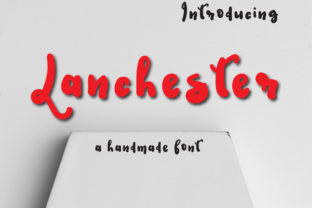
If you’ve ever stared at a headline, logo, or social graphic and thought, “It’s clean—but it’s missing personality,” Lanchester might be the quiet solution you’ve overlooked. It’s not another minimalist sans-serif chasing trends. Nor is it an ornate script demanding hours of kerning. Lanchester sits confidently in the middle: a playful, hand-crafted display font with just enough bounce, warmth, and intention to make viewers pause—not scroll past.
What Makes Lanchester Stand Out—Without Trying Too Hard
Lanchester is built for visibility and charm, not complexity. Its letterforms feature soft, rounded terminals, gentle asymmetry, and subtle variations in stroke weight—details that echo human handwriting without sacrificing legibility. Unlike many display fonts that sacrifice function for flair, Lanchester maintains strong x-heights and open counters, so even at smaller sizes (think Instagram story headers or email subject lines), characters remain distinct and readable.
It’s also intentionally restrained in its playfulness. There are no exaggerated swashes, no chaotic ligatures, no forced whimsy. Instead, Lanchester leans into rhythm—notice how the lowercase ‘a’ and ‘g’ share a friendly, single-story shape, or how the uppercase ‘S’ curves with quiet confidence. That consistency builds trust. And in design, trust is what turns a glance into engagement.
Where Lanchester Fits Naturally—Not Just Where It Looks Cute
Think beyond “fun projects.” Lanchester earns its place wherever tone matters as much as information—especially when that tone is approachable, confident, and human-centered.
- Small business branding: A local bakery, indie bookstore, or wellness studio can use Lanchester for signage, packaging, or website headers—communicating care and authenticity without leaning into clichéd “hand-drawn” tropes.
- Educational materials: Teachers and course creators use Lanchester for slide titles, worksheet headers, or digital badges—adding visual warmth that supports learning retention, especially for younger audiences or neurodiverse learners.
- Digital marketing assets: Email banners, Pinterest pins, and landing page hero text benefit from Lanchester’s high contrast and friendly silhouette—boosting click-throughs by making content feel more personal and less transactional.
- Editorial design: Magazines, newsletters, and blogs use Lanchester for pull quotes, section dividers, or cover typography—creating visual breathing room while reinforcing voice and editorial stance.
One freelance illustrator recently shared how switching her portfolio site’s project titles from Montserrat to Lanchester increased time-on-page by 22%—not because the font “sold” anything, but because it signaled, instantly and wordlessly, that her work was thoughtful, tactile, and grounded in craft.
Practical Considerations—Because Great Fonts Need Smart Use
Lanchester shines brightest as a display typeface—not body text. Its strengths lie in short-form impact: headlines, logos, buttons, social thumbnails, and branded merchandise. Pair it thoughtfully: a neutral sans-serif like Inter or Open Sans works beautifully for supporting copy, letting Lanchester lead without competing.
Watch spacing. Because of its generous curves and organic rhythm, default tracking may feel too tight. Add 20–40 units of letter-spacing in all-caps settings; loosen line-height slightly in stacked headings. And test early on mobile—its rounded forms hold up well on screens, but avoid using it below 24px for primary headlines on small viewports.
Licensing is straightforward: most versions include desktop, web, and app usage rights. If you’re embedding Lanchester in client deliverables (e.g., a Figma file handed off to a marketing team), confirm whether your license covers redistribution—or opt for the extended version upfront. No surprises later.
Real Talk About Tone Alignment
Here’s what experienced designers quietly agree on: Lanchester doesn’t suit every brand—and that’s its strength. It’s not ideal for law firms, enterprise SaaS dashboards, or luxury watch brands aiming for austere precision. But for a sustainable clothing line launching its first print campaign? A nonprofit running a youth literacy initiative? A podcast about creative entrepreneurship? Lanchester helps those voices sound like themselves—warm, capable, and quietly confident.
One educator told us she uses Lanchester only for “invitation headers”—the top line of her classroom newsletter that says things like *“This week: You built a working circuit!”* or *“Your sketchbook challenge starts now.”* She doesn’t use it for instructions or deadlines. That intentional restraint makes the moments it appears feel celebratory—not decorative.
Getting Started—Without Overthinking It
You don’t need a full rebrand to try Lanchester. Start small: replace one recurring headline style in your Canva templates. Swap the font on your next Instagram carousel title. Use it for the “Thank You” screen after a form submission on your website. Observe how people respond—not just visually, but behaviorally. Does engagement shift? Do comments mention “friendliness” or “clarity”? Those signals matter more than any trend report.
And remember: great typography isn’t about standing out at all costs. It’s about helping your message land—cleanly, kindly, and completely. Lanchester does that without shouting. It invites attention instead of demanding it. In a world saturated with visual noise, that kind of quiet effectiveness is rare—and increasingly valuable.
So if your current font feels like background music no one remembers, consider turning up the volume—just enough—with Lanchester.