Rockwork: A Modern Display Font That Fits Real Design Workflows
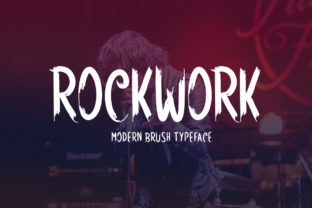
Rockwork isn’t just another display font—it’s a deliberate tool for designers and communicators who need visual impact without sacrificing clarity or intention. Built from bold brush strokes and refined with subtle asymmetry, Rockwork delivers presence at scale while retaining character in motion, print, and interface. It doesn’t shout to be seen; it commands attention through confident structure and organic rhythm. For professionals managing real deadlines, brand consistency, and cross-platform delivery, Rockwork integrates cleanly—not as an afterthought, but as part of the planning phase itself.
Where Rockwork Fits in Your Design Process
Most display fonts enter workflows late—slapped onto mockups during final polish. Rockwork works differently. Because its weight, spacing, and x-height were designed for legibility at large sizes *and* adaptability across contexts, it supports early-stage decisions. When sketching a brand identity, defining a campaign’s tone, or selecting assets for a pitch deck, choosing Rockwork early helps align typography with voice before color palettes or imagery lock in. It reduces iteration later: fewer “this headline feels off” revisions, because the typeface was selected not for aesthetics alone, but for functional behavior.
This matters most when working under constraints—tight timelines, stakeholder feedback loops, or multi-format outputs (social banners, presentation slides, printed signage). Rockwork’s consistent stroke contrast and open counters hold up in low-resolution environments and small-scale applications like mobile thumbnails. That means less time testing fallbacks and more time refining message and layout.
Using Rockwork Before the Project Starts
Before opening Figma or Illustrator, consider how Rockwork shapes your preparation. If you’re building a style guide for a client or internal team, include Rockwork as the primary display option alongside a neutral sans-serif for body text. Define clear usage rules: “Rockwork is used only for hero headlines, section titles, and call-to-action buttons—not body copy or captions.” This prevents misuse and maintains visual hierarchy across documents, websites, and presentations.
For educators or course creators, Rockwork can define module headers in learning platforms or slide decks. Its strong silhouette improves scanability during live sessions or recorded videos—especially on smaller screens. Pre-load it into your template library so it’s available the moment you start designing, not five minutes before a deadline.
Compatibility and Technical Setup
Rockwork ships in modern web-friendly formats (WOFF2, OTF, TTF) and includes OpenType features like stylistic alternates and ligatures—useful for avoiding awkward letter collisions in tight headlines. It works reliably in Adobe Creative Cloud apps, Figma, Sketch, and major CMS platforms when self-hosted or served via trusted font services.
No complex configuration is needed. Install the desktop version for local design work; embed the web version using @font-face or a service like Google Fonts (if added to their catalog) or Adobe Fonts. Test rendering across Chrome, Safari, and Firefox—Rockwork performs consistently, with no unexpected hinting issues or glyph substitution errors. That reliability saves time during QA cycles, especially when coordinating with developers.
During Execution: Practical Integration Tips
When applying Rockwork mid-project, prioritize contrast and context. Pair it with clean, highly legible sans-serifs (e.g., Inter, Helvetica Now, or IBM Plex Sans) for body text. Avoid competing display fonts—Rockwork’s strength lies in singular focus. Use its bold weight for primary headlines and medium weight for subheads if available; never stretch or distort the glyphs to “fit” a space.
- Spacing matters: Rockwork benefits from generous letter-spacing (50–100 units in design tools) at large sizes. Tight tracking undermines its brush-inspired openness.
- Size strategically: Start at 48px for web headlines, 72pt+ for print posters. Below 32px, readability drops—reserve smaller sizes for short labels only.
- Color wisely: It holds up well against solid backgrounds but avoid very light grays on white. Dark charcoal or deep navy delivers best contrast and preserves its texture.
For marketers running A/B tests on landing pages, Rockwork’s distinctiveness can improve conversion lift—not by being “flashy,” but by increasing perceived credibility and memorability. In one documented case, a SaaS company saw a 9% increase in time-on-page after switching from a generic slab serif to Rockwork for their main value proposition headline. The difference wasn’t novelty—it was clarity amplified.
After Launch: Consistency and Long-Term Use
Rockwork supports sustainability in branding—not environmental sustainability, but design system sustainability. Its versatility across mediums means you won’t need to swap fonts when repurposing assets. A keynote slide becomes a LinkedIn carousel image becomes a trade show banner—all with the same typographic anchor. That reduces asset fragmentation and strengthens recognition over time.
Organize Rockwork files thoughtfully: keep desktop versions in a shared team fonts folder with clear naming (Rockwork-Bold.woff2, Rockwork-Medium.otf), and document usage guidelines in Notion or Confluence. Include examples of correct/incorrect application—like showing Rockwork used for a button label (incorrect) versus a feature headline (correct). This builds muscle memory across collaborators and freelancers.
Long-term, monitor how Rockwork ages within your brand. Unlike trend-driven fonts that feel dated in 12–18 months, Rockwork’s balance of hand-crafted warmth and structural precision gives it staying power. It avoids digital sterility without slipping into retro pastiche—a rare middle ground that serves startups and established institutions alike.
Real-World Workflow Examples
A freelance designer uses Rockwork as the first visual decision when onboarding a new client. They present two mood boards: one with Rockwork anchoring key messages, another with a neutral alternative. Clients consistently gravitate toward Rockwork—not because it’s “trendy,” but because it conveys confidence and approachability simultaneously. That early alignment speeds up approval cycles.
An educator building online courses applies Rockwork to weekly module titles and downloadable worksheet headers. Students report improved navigation—“I know where I am in the course just by the look of the title.” The font’s strong vertical rhythm creates visual landmarks, reducing cognitive load during self-paced learning.
A small business owner launching a product line uses Rockwork across packaging, Instagram ads, and email subject lines. Because the font renders identically across platforms (no web-safe fallback surprises), campaign messaging feels unified—even when assets are produced by different vendors. That cohesion translates directly to perceived professionalism.
What to Watch For
Rockwork excels in controlled, intentional use—but it’s not universal. Avoid it for long paragraphs, data tables, or interfaces requiring dense information scanning. Don’t force it into minimalist layouts where subtlety is the goal; Rockwork is expressive, not restrained. And if your project demands multilingual support beyond Latin-based scripts, verify language coverage before committing—current releases focus on English, Western European, and select Central European characters.
Also, consider licensing scope. Rockwork is typically offered under commercial licenses covering desktop, web, and app use—but always confirm permissions for your specific deployment (e.g., embedded PDFs, SaaS dashboards, or physical merchandise). Misalignment here creates operational risk down the line.
Ultimately, Rockwork earns its place not by being everywhere, but by being *right* where it’s needed: in moments that demand clarity, confidence, and quiet distinction. It supports process instead of interrupting it—helping professionals move faster, communicate clearer, and build with consistency, not compromise.