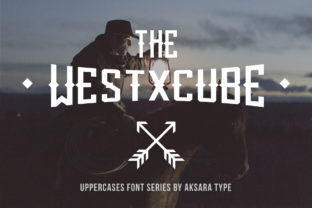
The Westxcube: A Vintage-Modern Font That Anchors Design Decisions
Fonts are rarely neutral. They carry tone, signal intent, and shape perception before a single word is read. The Westxcube stands apart—not because it’s loud or ornate, but because it’s deliberately grounded. Its vintage roots—visible in the subtle irregularities of stroke weight, the confident slab-serif structure, and the slightly condensed proportions—are fused with a crisp, contemporary rhythm. The result isn’t retro pastiche or sterile minimalism. It’s a font that feels both familiar and freshly intentional.
This duality makes The Westxcube especially valuable for professionals who need typography to do more than decorate: it helps clarify hierarchy, reinforce brand voice, and support decision-making at every stage of a project—from early moodboarding to final delivery.
Where The Westxcube Fits in Your Workflow
Unlike utility fonts designed purely for legibility or display fonts meant only for hero text, The Westxcube occupies a strategic middle ground. It works best when you’re balancing personality with professionalism—when your audience expects credibility but also responds to authenticity.
Think of it as a workflow anchor: a consistent visual reference point across phases where tone and clarity matter most. You might select it early—not as a decorative afterthought, but as part of your initial framing. For example, a small business owner sketching a new service page might use The Westxcube for headings *before* writing copy, letting its urban confidence inform the language and pacing of the message. A freelance designer building a brand system may test The Westxcube alongside a clean sans-serif body font to establish contrast that feels intentional, not arbitrary.
Using The Westxcube Before the Project Begins
Preparation is where The Westxcube adds quiet leverage. Its distinct character helps surface assumptions about audience, medium, and message. If you’re drafting a workshop syllabus for educators, applying The Westxcube to section headers during outline phase reveals whether your structure feels cohesive—or if the tone veers too casual or overly rigid. Similarly, marketers testing landing page variants can drop The Westxcube into headline mockups to gauge emotional resonance before investing in full design iterations.
This pre-project use isn’t about locking in final assets. It’s about using typography as a diagnostic tool—letting The Westxcube expose gaps in alignment between strategy and expression.
Integrating During Execution
Once work is underway, The Westxcube supports consistency without demanding rigidity. Its strong x-height and open counters ensure readability at smaller sizes—making it viable for subheadings, pull quotes, or even short captions in presentations or reports. Because it avoids extreme contrast or exaggerated features, it pairs predictably with common UI fonts (like Inter, Roboto, or Open Sans) and print-safe alternatives (such as Merriweather or Source Serif).
Here’s how that plays out practically:
- For bloggers and content creators: Use The Westxcube for article titles and section breaks—then switch to a highly legible serif or sans for body text. This creates visual rhythm while keeping reading fatigue low.
- For educators and trainers: Apply it to slide titles and key concept headers in course decks. Its urban feel subtly signals relevance without distracting from learning objectives.
- For small business owners building collateral: Deploy The Westxcube consistently across business cards, email headers, and social banners. Its recognizability builds familiarity faster than generic fonts—even without logos or color shifts.
Crucially, The Westxcube doesn’t require perfect conditions to perform. It holds up well on screens with modest resolution, renders cleanly in PDFs, and converts reliably in most design and publishing tools—including Figma, Adobe Creative Cloud, Canva (via upload), and web platforms that support custom @font-face loading.
Post-Project Refinement and Long-Term Use
After launch or delivery, many teams overlook typography’s role in evaluation. But revisiting how The Westxcube performed—where it strengthened messaging, where it created friction—offers concrete insight for future work.
Ask yourself: Did users scan headings quickly? Did printed materials retain impact at smaller sizes? Did the font complement photography or illustrations, or compete with them? These aren’t aesthetic questions alone—they’re usability metrics. Over time, tracking these observations helps refine your typographic judgment and strengthens your ability to choose fonts based on function, not just feeling.
Long-term adoption of The Westxcube hinges less on novelty and more on reliability. It doesn’t chase trends; it provides a stable foundation. That makes it ideal for organizations scaling their visual identity—whether a startup defining its first brand guidelines or an established nonprofit refreshing its outreach materials. Its versatility across digital and print means fewer format-specific overrides, less version drift, and smoother handoffs between designers, developers, and content editors.
Practical Tips for Smooth Integration
Getting the most from The Westxcube isn’t about complexity—it’s about intentionality. Here’s what works:
- Start with hierarchy, not decoration. Assign The Westxcube to one level only at first—usually H1 or primary section headers—and build outward. Resist using it for body text unless testing shows exceptional readability in your specific context.
- Test contrast early. Pair it with background colors or imagery before finalizing layouts. Its boldness can overwhelm light grays or busy textures—so verify legibility in real usage scenarios, not just mockups.
- Leverage its rhythm for pacing. Use tighter letter-spacing for compact headlines (e.g., dashboard widgets), and default spacing for editorial contexts. Avoid excessive tracking—it weakens the font’s natural urban cadence.
- Document usage clearly. If sharing files with collaborators or developers, specify fallbacks (e.g., “font-family: 'The Westxcube', 'Segoe UI', system-ui, sans-serif;”) and note where weights are critical (regular vs. bold). This prevents unintended substitutions that dilute its impact.
- Revisit usage quarterly. As your projects evolve, so should your typographic choices. Audit where The Westxcube appears—does it still serve the same strategic role? Has audience feedback hinted at misalignment? Adjustments here are low-effort, high-impact.
Why This Font Endures Beyond Aesthetic Preference
What separates The Westxcube from passing trends is its operational usefulness. It doesn’t ask for special treatment. It doesn’t demand perfect environments or expert tuning. Instead, it offers dependable performance across contexts where clarity, confidence, and cohesion matter most—pitch decks, product documentation, educational resources, local event posters, newsletter headers, and internal dashboards.
Its vintage-modern balance isn’t stylistic window dressing. It reflects a practical truth: the most effective tools bridge eras. They honor craft while serving current needs. The Westxcube does exactly that—giving professionals a way to signal thoughtfulness, stand out without shouting, and maintain consistency without sacrificing adaptability.
That’s why it belongs not just in your font library—but in your planning toolkit, your collaboration standards, and your long-term quality control checklist. When chosen deliberately and applied consistently, The Westxcube becomes less of a design element and more of a quiet partner in execution.