Bound: A Bold, Timeless Display Font
If you’ve ever stared at a headline that felt both confident and quietly elegant—like it belonged equally on a boutique book cover and a high-traffic landing page—you’ve likely sensed the power of a truly intentional display font. Bound is exactly that kind of typeface: unapologetically bold, yet refined enough to avoid visual fatigue; contemporary in structure, but grounded in classic proportion. It’s not just another decorative option—it’s a strategic design tool for people who understand that typography shapes perception before a single word is read.
What Makes Bound Stand Out—Without Shouting
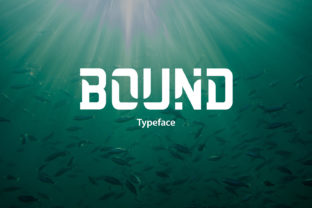
At first glance, Bound commands attention—but what sets it apart is how it holds it. Its letterforms feature strong vertical stress, generous x-height, and subtle, humanist curves that soften its assertiveness. Unlike many display fonts that rely on exaggerated contrast or extreme geometry, Bound balances weight and rhythm with intention. The uppercase letters have a stately presence, while the lowercase maintains clarity even at smaller sizes—unusual for a display face. Its spacing is thoughtfully tuned, so words flow naturally rather than feeling cramped or overly spaced.
It’s also built for real use—not just mockups. The family includes multiple weights (Light through Black), true italics—not slanted copies—and a full range of OpenType features like ligatures, small caps, and stylistic alternates. That means you’re not just choosing a look—you’re selecting flexibility for evolving projects.
Where Bound Adds Real Value—Not Just Visual Polish
Think of Bound as your go-to for moments where tone matters as much as content. It excels where hierarchy, personality, and memorability intersect—especially in environments where users scan quickly and decide instantly.
- Branding & Identity: Startups and creative studios use Bound for logotypes and wordmarks because it conveys confidence without coldness. One freelance designer recently paired it with a warm, low-contrast sans-serif for a wellness brand—resulting in a logo that felt both grounded and aspirational.
- Digital Interfaces: While not meant for body text, Bound works exceptionally well for hero headings, call-to-action buttons, and section dividers in web and app UIs. Its generous counters and open apertures improve legibility on screens—even at 32px on mobile.
- Educational & Editorial Design: Educators creating workshop handouts or publishers designing course covers report that Bound helps signal “this is important” without overwhelming learners. Its readability at larger sizes makes it ideal for slide titles, infographics, and printed posters meant to be seen from across a room.
- Social & Marketing Assets: Marketers find Bound especially effective for Instagram carousels and email headers—where split-second recognition drives engagement. Its distinct letterforms reduce visual noise in crowded feeds, and its consistent stroke weight ensures crisp rendering across devices.
Practical Considerations—Using Bound Thoughtfully
Like any powerful tool, Bound delivers best when matched to purpose—not just preference. Here’s what experienced designers keep in mind:
- Reserve it for impact, not volume. Use it for headlines, logos, pull quotes, or short statements—not paragraphs. Its strength lies in contrast, not continuity.
- Pair it intentionally. It pairs beautifully with neutral, highly legible sans-serifs (think Inter, Poppins, or Lato) or even restrained serifs like Merriweather or Source Serif. Avoid pairing it with other bold or decorative fonts—that dilutes its authority.
- Test readability early and often. Try Bound at actual usage sizes—not just in your font menu. On screens, test against different backgrounds and lighting conditions. Its boldness can sometimes blur at very small sizes on lower-DPI displays.
- Check licensing for your use case. If you’re embedding Bound in a SaaS product, using it in client deliverables, or generating dynamic content (like certificates or reports), verify the license covers those scenarios. Some versions are web-only; others include desktop, app, and server use.
Real Projects, Real Results
A small publishing house switched to Bound for their series title treatment after noticing declining click-through rates on newsletter banners. Within two months, banner CTR increased by 22%—not because the message changed, but because readers paused longer and associated the title treatment with quality and intention.
Another example: a community college redesigned its event posters using Bound for dates and speaker names, paired with a clean sans-serif for details. Faculty reported higher attendance at evening workshops—attributing part of the shift to improved visual clarity and perceived professionalism.
Even hobbyists benefit. One blogger crafting illustrated recipe cards uses Bound for dish names and serving sizes. She notes that readers consistently comment on how “appetizing” the typography feels—proof that emotional resonance isn’t reserved for high-budget campaigns.
Why Bound Fits Your Workflow—Not Just Your Aesthetic
For professionals juggling tight deadlines and diverse audiences, Bound reduces decision fatigue. You don’t need to experiment endlessly to find the right “vibe.” Its inherent balance—between strength and grace, modernity and timelessness—means it adapts without needing heavy tweaking.
It also supports consistency across touchpoints. Whether you’re designing a pitch deck, drafting a social campaign, or preparing a print brochure, Bound provides a reliable anchor point. That cohesion builds trust—not just with clients or customers, but with your future self, when you revisit a project six months later and still recognize your own voice in the typography.
And because it’s optimized for both screen and print output, you avoid last-minute substitutions or rendering surprises. No more discovering mid-print that your headline looks muddy on coated stock—or that your web font fails to load on older browsers.
Final Thought—Typography as Quiet Strategy
You don’t need flashy animations or complex layouts to make an impression. Often, the most effective design choices are the ones people don’t consciously notice—until they feel the difference. Bound is one of those quiet strategies: a font that doesn’t distract, but directs. It doesn’t shout “look at me”—it says, “this matters.”
Whether you're launching a product, teaching a class, building a personal brand, or simply making something beautiful for yourself, Bound gives your ideas the visual weight they deserve—without asking for extra effort. It’s ready when you are.