Misha Duo: Two Fonts, One Bold Design Voice
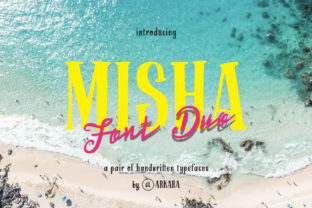
Imagine having two fonts that don’t just work well together—they *belong* together. That’s Misha Duo in a nutshell. It’s not a single typeface with variations, but a thoughtfully crafted pair: one clean, modern sans serif and one expressive, slightly condensed display font—both designed to complement each other without competing.
What makes Misha Duo special isn’t complexity—it’s clarity. The sans serif style is friendly and legible at any size, ideal for body text, captions, or interface labels. The second style—often called the “display” or “headline” variant—adds personality: subtle contrast, confident letterforms, and a touch of rhythm that draws attention without shouting. Together, they create visual hierarchy naturally, saving you time on pairing decisions and giving your projects instant cohesion.
Why Designers (and Non-Designers) Reach for Misha Duo
You don’t need a design degree to appreciate how much easier Misha Duo makes everyday creative tasks. Whether you’re drafting a newsletter, designing a Canva presentation, building a Shopify product page, or laying out a classroom handout, consistent typography builds trust—and Misha Duo delivers that consistency effortlessly.
For bloggers and small business owners, it solves a real problem: looking professional without hiring a designer. A blog post with Misha Duo’s sans serif for paragraphs and its bolder sibling for subheadings feels intentional, not accidental. Social media graphics gain polish when headlines pop just enough against clean supporting text. Even educators find it useful—lesson slides become more scannable, worksheets more inviting, and student-facing materials more inclusive thanks to its clear letter shapes and open spacing.
Real Projects, Real Results
- A freelance photographer uses the display style for portfolio titles and the sans serif for client testimonials—creating elegant contrast on her website without overcomplicating layout.
- A local café owner prints weekly specials on chalkboard-style flyers using both fonts: bold headlines grab attention from across the room, while readable body text shares menu details clearly.
- An online course creator applies Misha Duo across PDF workbooks and video thumbnails—ensuring brand recognition stays strong whether someone’s reading on a phone screen or printing a worksheet.
- A nonprofit team streamlines their annual report design by using the same font pair throughout: headings guide readers, body text supports understanding, and the harmony between styles quietly reinforces their message of unity and purpose.
These aren’t hypotheticals—they reflect how people actually use Misha Duo today. Its strength lies in flexibility, not flashiness. It doesn’t demand attention; it earns it through balance.
Where Misha Duo Fits Naturally
Misha Duo thrives in digital and print spaces alike. On websites, it performs well across devices—its generous x-height and balanced proportions keep readability high even on smaller screens. In email marketing tools like Mailchimp or Beehiiv, both styles render cleanly and load quickly. For print, its crisp outlines and consistent weight distribution make it reliable for brochures, business cards, and signage—even at larger sizes where some fonts lose definition.
It’s also beginner-friendly in practice. Unlike font families with dozens of weights and widths, Misha Duo offers just two distinct voices—so there’s less to learn, less to misapply, and no risk of visual clutter. You won’t waste time toggling between Light, Medium, ExtraBold, or Italic variants trying to get things “just right.” With Misha Duo, right is simple: one voice for structure, one for emphasis.
Things to Keep in Mind Before You Use It
Like any tool, Misha Duo shines brightest when matched to the right job. It’s not meant for ultra-formal legal documents or highly technical scientific journals where tradition and strict neutrality are expected. Its charm comes from warmth and approachability—not austerity.
Also, while both styles share DNA, they’re intentionally distinct. Avoid using them interchangeably within the same line of text. Instead, lean into their roles: let the display style lead, and let the sans serif support. This isn’t a limitation—it’s what gives Misha Duo its quiet confidence.
If you're embedding Misha Duo on a website, check licensing terms first. Some versions include web font kits with CSS-friendly formats (WOFF2, etc.), while others may be desktop-only. Always verify usage rights based on your project scope—especially if it’s commercial or publicly distributed.
More Than Just Pretty Letters
Typography influences how people feel before they even read a word. Misha Duo invites engagement. Its rounded terminals and gentle curves feel human—not robotic. Its spacing allows breathing room, reducing cognitive load. And because both fonts were built as a pair—not retrofitted later—they scale and align intuitively. Baselines match. Kerning feels natural. Line heights flow.
That matters whether you’re crafting a heartfelt Instagram caption or labeling ingredients on a handmade soap bar. Good typography shouldn’t distract—it should disappear into the experience, leaving only clarity and connection behind.
And yes, Misha Duo is beautiful—but beauty here serves function. It helps readers move smoothly from headline to detail. It helps brands communicate personality without extra words. It helps creators focus on ideas instead of formatting puzzles.
So if you’ve ever hesitated before choosing fonts—wondering whether something looks “right,” or worrying about consistency across platforms—you’ll likely find relief in Misha Duo. It doesn’t ask for expertise. It asks only that you choose where to lead and where to support—and then does the rest with quiet assurance.