Why Girlboss Is More Than Just a Font—It’s a Design Statement
Fonts don’t just communicate words—they communicate attitude. Tone. Confidence. And when you choose Girlboss, you’re not selecting a typeface; you’re choosing a mindset. With its bold, geometric structure and unexpected curves, Girlboss is a display font that commands attention without shouting. It’s strong, yes—but also playful. Assertive, yet approachable. That rare kind of type that feels both intentional and effortless.
What Makes Girlboss Stand Out Visually?
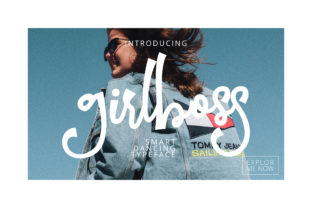
At first glance, Girlboss looks deceptively simple: clean lines, generous spacing, and a confident x-height. But look closer. Notice how the uppercase G curls with quiet authority? How the lowercase a and g break from strict geometry with subtle, humanist warmth? These aren’t accidents—they’re thoughtful decisions that give Girlboss its “undeniably unique charm.”
Unlike many display fonts that lean heavily into either retro kitsch or sterile minimalism, Girlboss walks a balanced line. Its letterforms are tightly kerned for impact but never cramped. The stroke contrast is moderate—not dramatic enough to feel theatrical, but pronounced enough to add rhythm and visual interest. And crucially, it scales beautifully: whether set at 48pt on a poster or 36pt as a hero headline on a mobile-first landing page, Girlboss retains its personality.
Designed for Impact—Not Just Aesthetics
Display fonts like Girlboss aren’t meant for body text. They’re built for moments that need emphasis: logos, banners, social media graphics, product packaging, and campaign headlines. Their job isn’t to disappear—it’s to anchor attention and reinforce message intent.
That’s where Girlboss shines. Its strength isn’t aggressive—it’s self-assured. Think of a wellness brand launching a new “Own Your Energy” campaign. Pairing Girlboss with a soft sans-serif for supporting copy creates instant hierarchy and emotional resonance. Or consider an indie bookstore promoting its “Bold Reads” summer series: Girlboss in deep indigo over cream paper says *intelligent*, *unapologetic*, and *inviting*—all at once.
How Designers Are Using Girlboss Right Now
In real-world workflows, Girlboss isn’t sitting in a “maybe later” folder. It’s actively shaping visual identities across industries—from fashion startups to feminist podcasts, from boutique studios to inclusive edtech platforms. Here’s how it’s being applied with intention:
- Branding systems: Used as a primary logo mark or secondary wordmark, especially where the brand voice leans into empowerment, creativity, or modern femininity—without leaning on clichés.
- Digital campaigns: Dominating Instagram carousels, email headers, and limited-run merch drops thanks to its high legibility at small sizes and screen-friendly contrast.
- Print collateral: Elevating business cards, zines, and event posters with tactile presence—especially when printed foil or embossed.
- UI microcopy: Sparingly used for key CTAs (“Get Started”, “Join Us”, “Launch Now”) where tone differentiation matters more than typographic consistency.
One designer recently shared how she used Girlboss to rebrand a women-led financial coaching service. “We needed something that felt capable—not cute,” she explained. “Girlboss gave us credibility *and* warmth in one package. Clients told us the logo made them feel seen before they even read a single sentence.”
Pairing Girlboss Thoughtfully (Without Overcomplicating)
A common hesitation around bold display fonts is pairing anxiety: “What goes with this?” The good news? Girlboss plays well with others—especially when you follow two simple principles:
- Contrast by function, not just style. Pair Girlboss (display, expressive, high-impact) with a neutral, highly legible sans-serif (like Inter, Poppins, or Manrope) for body copy. Avoid other decorative or high-contrast fonts nearby—they’ll compete, not complement.
- Let Girlboss breathe. Give it generous line height, ample margin space, and minimal surrounding elements. Clutter dulls its effect. Simplicity sharpens it.
For example, a newsletter banner using Girlboss for the headline “Get Bossy” works best with a clean, light-weight sans-serif underneath—say, 18pt Inter Light in charcoal gray. No extra dividers, no icons crowding the edges. Just clarity, confidence, and calm.
When Girlboss Might Not Be the Right Fit
Like any strong voice, Girlboss isn’t universal—and that’s a feature, not a flaw. It’s less effective in contexts requiring:
- Formal tradition: Law firms, academic journals, or heritage luxury brands may find its energy too forward-leaning.
- High-density information: Don’t use it for tables, footnotes, or multi-paragraph quotes. Its design prioritizes momentary impact—not sustained reading.
- Global multilingual support: While Girlboss covers Latin-based languages well, check glyph coverage if your project includes extended diacritics, Cyrillic, or Asian scripts—it’s optimized for English-first use cases.
If your project demands broad language support or ultra-conservative tone, consider alternatives—but know that Girlboss wasn’t built for those jobs. It was built for moments that deserve to be owned.
Getting Started: Practical Tips for Using Girlboss
You don’t need a full brand overhaul to test Girlboss. Start small—and smart:
- Try it in Figma or Adobe Express first. Drop it into a mood board or social post mockup. Does it lift the energy? Does it feel authentic to your voice—or like a costume?
- Test it across devices. View your design on mobile, tablet, and desktop. Girlboss holds up well, but always verify rendering—especially in Chrome vs Safari.
- Check licensing early. Girlboss is available through reputable foundries and marketplaces. Make sure your license covers web embedding, app use, or commercial print—depending on your needs.
- Don’t overuse it. One powerful Girlboss headline beats three diluted ones. Let it land—and then step back.
And remember: “Get bossy” isn’t about volume. It’s about clarity. Decisiveness. Owning your creative choices—not because they’re trendy, but because they’re true.
Why This Moment Feels Right for Girlboss
Design trends cycle fast—but cultural shifts move slower. Right now, audiences respond to authenticity over polish, substance over slickness, and voice over veneer. Girlboss fits right into that shift. It doesn’t try to be everything. It knows what it is—and does it well.
It’s showing up in branding for female-founded VC funds, in packaging for clean beauty lines, in keynote slides for TEDx talks about leadership redefined. Not as decoration—but as declaration. A visual shorthand for “I’m here. I mean it. Let’s go.”
That’s the power of a well-chosen display font. And that’s why Girlboss continues to resonate—not just as a typeface, but as a quiet act of alignment between design, message, and mission.