Forma Rough: A Distinctive Typographic Voice Rooted in Futurist Energy
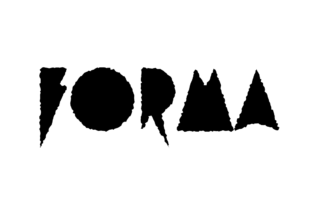
Forma Rough isn’t just another display font—it’s a deliberate departure from polished uniformity. Developed as an experimental typeface with clear lineage to Italian Futurism, Forma Rough carries the movement’s spirit of dynamism, fragmentation, and raw expression into contemporary design practice. Its visual language—marked by irregular stroke endings, subtle texture, uneven baseline alignment, and intentional asymmetry—serves a specific purpose: to introduce controlled tension and human immediacy where digital perfection often dominates.
What Sets Forma Rough Apart From Other “Rough” or Display Fonts
Many fonts labeled “rough” rely on heavy distressing, grunge overlays, or inconsistent glyph scaling—effects that can feel arbitrary or dated. Forma Rough avoids those pitfalls through considered construction. Its roughness is baked into the letterforms themselves: terminals taper unpredictably, counters breathe with organic variation, and weight transitions follow hand-drawn logic rather than mechanical interpolation. This isn’t simulated imperfection—it’s designed inconsistency, calibrated for legibility at medium sizes (16–48pt) while retaining expressive force.
The family includes two primary weights—Regular and Bold—with matching italics. There are no condensed or extended variants, nor variable-axis support. That restraint is intentional: Forma Rough prioritizes typographic character over expansive versatility. It works best when deployed with editorial discipline—not as a full UI system, but as a strategic voice within a broader typographic hierarchy.
Practical Strengths in Real-World Contexts
Where Forma Rough excels is in projects demanding personality without sacrificing clarity. Consider these grounded applications:
- Editorial headlines and magazine covers: Paired with a neutral, highly legible text face (e.g., a robust serif like Tiempos Text or a crisp sans like Inter), Forma Rough establishes tone instantly—ideal for cultural criticism, independent publishing, or arts-focused features.
- Brand identity systems for creative studios or niche product lines: Its distinct rhythm supports memorability without relying on clichéd “handmade” tropes. A ceramic studio, analog photography brand, or independent record label might use it sparingly—for logotype accents, limited-edition packaging, or exhibition signage—where authenticity and craft resonance matter more than mass appeal.
- Digital campaigns with short-form impact: In social media banners, email headers, or microsite hero sections, Forma Rough holds attention. Its texture translates well across retina and standard displays, provided sizing remains above 24px and contrast ratios meet WCAG AA minimums (which it does against solid dark or light backgrounds).
It performs reliably in modern browsers and major design tools (Figma, Adobe Creative Cloud, Sketch). Kerning pairs are thoughtfully adjusted—not exhaustive, but sufficient for common word combinations. OpenType features include standard ligatures and stylistic alternates, allowing minor refinements (e.g., swapping a sharper ‘t’ terminal for a softer one) without switching fonts.
Limitations Worth Acknowledging
Forma Rough is not suited for body text, data tables, interface labels, or any setting requiring rapid scanning or high-density information delivery. Its rhythmic irregularity, while expressive, slows reading pace beyond headline use. Similarly, its lack of extensive language support—covering Latin-1 and basic Latin-Extended-A characters—means it’s not viable for multilingual publishing or global-facing brands requiring Cyrillic, Greek, or extended diacritics.
Another practical consideration: licensing. Forma Rough is available under commercial license, but not via subscription platforms like Adobe Fonts. Users must acquire it directly from the foundry or authorized resellers. That adds a small procurement step—but also ensures consistent version control and direct access to updates or support.
Audience Fit: Who Benefits Most—and When
Professionals who regularly balance aesthetic intention with functional clarity will find Forma Rough most valuable. Freelance designers building distinctive identities for boutique clients; educators developing course materials around design history or typography; indie publishers launching visually driven zines or art books—all benefit from its focused utility.
Small business owners in creative sectors (e.g., gallery owners, artisan food producers, architecture firms emphasizing materiality) may use it selectively to reinforce brand values tied to process, texture, or heritage—provided they pair it with strong supporting typography and avoid overuse. For marketers running A/B tests on landing pages, Forma Rough is rarely the optimal choice for primary CTAs; however, it can elevate secondary messaging (“Hand-poured since 2018”) or section dividers where tonal nuance strengthens perceived quality.
Bloggers and content creators focused on visual storytelling—especially those covering design, culture, or urban environments—find Forma Rough effective for featured post titles or podcast episode graphics. Its energy aligns naturally with subjects involving motion, change, or counter-culture narratives. But it requires confidence in restraint: one strong application per layout, not blanket coverage.
Integration and Workflow Considerations
In practice, Forma Rough integrates cleanly into existing workflows. Its file size is modest (<150 KB per weight), and it renders predictably in both web and print contexts. When embedding via @font-face, serve WOFF2 for modern browsers and fallback to WOFF for broader compatibility—no unusual rendering quirks have been observed in testing across Chrome, Firefox, Safari, and Edge.
For Figma users, the font behaves as expected with auto-layout constraints and text resizing. In Adobe applications, it responds appropriately to paragraph and character styles—though manual tracking adjustments may be needed for tighter headline settings due to its inherent spacing rhythm.
One nuanced strength lies in its adaptability to color. Unlike many distressed fonts that lose definition in mid-tone hues, Forma Rough maintains legibility in deep teals, burnt umbers, or muted ochres—colors often favored in sophisticated, tactile-leaning palettes. That expands its usefulness beyond stark black-on-white scenarios.
Long-Term Value and Design Integrity
Typography choices signal intent as much as aesthetics. Forma Rough communicates a willingness to foreground process, embrace subtle imperfection, and engage with historical design movements meaningfully—not as pastiche, but as evolution. That lends it longevity: it avoids trend-driven gimmicks and instead occupies a durable niche between expressive display and typographic responsibility.
Its value grows with thoughtful application—not volume. A designer who uses Forma Rough once per quarter, precisely where its energy amplifies message and audience alignment, gains more credibility than one deploying it broadly as a stylistic crutch. That selectivity reinforces professional judgment, which audiences—especially discerning ones in creative, academic, or cultural fields—subtly recognize and trust.
In summary, Forma Rough earns its place not by trying to do everything, but by doing one thing exceptionally well: giving voice to ideas that thrive on contrast, texture, and historical awareness. It rewards careful pairing, respects reader attention, and remains legible without surrendering character. For professionals navigating the space between concept and execution, Forma Rough offers a reliable, expressive tool—one that stands out not by shouting, but by speaking with unmistakable inflection.