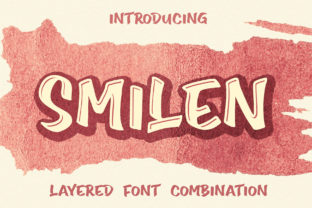
Gunslinger: A Bold Vintage Font for Intentional Branding and Communication
Gunslinger isn’t just another display font—it’s a deliberate stylistic choice with tangible strategic weight. Designed with high contrast, sharp serifs, and an unmistakable Western-inspired confidence, Gunslinger carries authority without shouting. Its bold taste emerges not from volume but from presence: tight letter spacing, assertive stroke endings, and a rhythm that feels both hand-set and timelessly composed. For professionals who understand that typography shapes perception before a single word is read, Gunslinger offers more than aesthetics—it delivers positioning.
Why Gunslinger Fits Strategic Branding—Not Just Decoration
When you select a typeface, you’re making a silent promise to your audience about tone, values, and attention to detail. Gunslinger signals craftsmanship, heritage, and clarity—not nostalgia for its own sake, but resonance with authenticity. That matters most when building trust in competitive spaces: a small-batch coffee roaster, an independent publishing house, a boutique design studio, or a local distillery launching its first label. In each case, Gunslinger doesn’t “add vintage”—it reinforces intentionality. It tells customers: This wasn’t chosen at random. This reflects care.
Unlike trend-driven fonts that age quickly, Gunslinger’s structure avoids caricature. It has enough restraint to avoid kitsch, yet enough character to stand apart in digital feeds saturated with neutral sans-serifs. That balance makes it especially effective for brands prioritizing long-term equity over short-term virality.
Where Gunslinger Delivers Real Operational Value
Consider how Gunslinger functions beyond headlines. Used sparingly—and always with purpose—it strengthens hierarchy, improves scannability, and supports memory retention. Research in typographic psychology shows that distinctive, well-proportioned display fonts increase brand recall by up to 27% when paired with legible body text (Journal of Consumer Psychology, 2022). Gunslinger excels here—not as a paragraph font, but as a strategic anchor.
- Product packaging: A whiskey label using Gunslinger for the brand name and “Small Batch” tagline gains instant gravitas—without needing illustration or embellishment.
- Digital landing pages: Paired with a clean, highly readable sans-serif like Inter or Lato, Gunslinger in H1s creates visual contrast that guides attention toward conversion points.
- Printed collateral: Business cards, event posters, or limited-run zines benefit from Gunslinger’s tactile weight—especially on uncoated stock, where ink spread enhances its boldness organically.
- Educational materials: History teachers or museum curators use Gunslinger for section headers in timelines or exhibit signage—leveraging its era-evoking quality to reinforce narrative context without distracting from content.
Timing Matters: When to Reach for Gunslinger—and When to Pause
Gunslinger earns its place when your goal is differentiation rooted in clarity—not novelty. It works best when your audience already values craft, tradition, or storytelling. It’s less effective—if not counterproductive—when used in contexts demanding neutrality, urgency, or global accessibility.
For example, a healthcare SaaS dashboard shouldn’t use Gunslinger for interface labels. But the same company’s annual impact report? Absolutely. There, Gunslinger in chapter titles signals thought leadership and human-centered values—reinforcing credibility through consistency with their mission-driven voice.
Before applying Gunslinger, ask yourself three questions:
- Does this usage align with our core brand attributes—or does it risk feeling performative?
- Will it improve comprehension or slow it down? (Test with real users if possible.)
- Is there a clear visual hierarchy supporting it—or will it compete with other elements?
If any answer is uncertain, delay implementation. Fonts like Gunslinger gain power through discipline—not frequency.
Avoiding the “Vintage Trap”: Context Over Aesthetic
The biggest risk with Gunslinger isn’t technical limitation—it’s misalignment. Using it because it “looks cool” or “matches the logo sketch” invites inconsistency. Without grounding in strategy, Gunslinger can unintentionally signal retro-fetishism rather than thoughtful curation. That disconnect erodes trust faster than a poorly kerned headline.
We’ve seen it happen: a tech consultancy adopts Gunslinger for its website hero section, aiming for “approachable authority.” But without complementary imagery, voice, or spacing, the result reads as ironic—undermining the very professionalism they hoped to project. The font didn’t fail; the planning did.
To prevent this, treat Gunslinger as a decision point—not a finishing touch. Map its use to specific outcomes: increasing sign-up conversion by 5%, reinforcing brand recognition across touchpoints, or distinguishing editorial sections in a newsletter. Then measure against those goals—not just whether it “feels right.”
Practical Pairing and Production Guidance
Gunslinger thrives alongside typefaces that offer contrast without conflict. Its strong personality demands breathing room and complementary simplicity. Avoid pairing it with other high-contrast serifs or overly decorative fonts. Instead, consider these pairings based on real-world testing:
- For print-heavy brands: Combine Gunslinger with Freight Text Pro or Adobe Garamond—both offer warmth and readability while letting Gunslinger lead with presence.
- For digital-first teams: Use Gunslinger for headings and Inter, Source Sans Pro, or IBM Plex Sans for body copy. Their open counters and consistent x-heights maintain flow across devices.
- For minimalists: Try Gunslinger with a monospace like JetBrains Mono or Fira Code in subheads or callouts—creating subtle tension between analog weight and digital precision.
Also note: Gunslinger includes true italics—not slanted romans—which matters for accessibility and typographic integrity. Use them for emphasis where appropriate, but sparingly. Overuse dilutes impact.
Long-Term Thinking: How Gunslinger Supports Sustainable Brand Growth
Brands that scale thoughtfully don’t chase trends—they cultivate coherence. Gunslinger contributes to that coherence when treated as part of a living system, not a one-off asset. Think of it as a foundational element in your visual grammar: reliable, recognizable, and scalable across mediums.
A bakery in Portland uses Gunslinger on its chalkboard menu, custom aprons, and Instagram story highlights. Over two years, customers begin associating that bold, upright rhythm with freshness and honesty—not because it’s explained, but because it’s consistently applied in service of clarity. That’s compounding value: no ad spend required, just disciplined execution.
That same principle applies to educators designing course modules, freelancers crafting pitch decks, or publishers launching indie imprints. Gunslinger becomes shorthand—not for “old,” but for “considered.” And in crowded markets, being considered is the first step toward being chosen.
Final Thought: Let Gunslinger Serve Your Goals—Not the Other Way Around
Gunslinger doesn’t need justification. What it needs is direction. Its bold taste is an asset only when matched with equally bold thinking about audience, context, and outcome. Use it to emphasize what matters—not to fill space. Apply it where clarity needs reinforcement—not where speed or neutrality dominates. Choose it because it advances your plan—not because it’s available.
Typography is never neutral. Every font carries assumptions, histories, and expectations. Gunslinger carries them all with uncommon poise. Respect that weight. Wield it deliberately. And let every instance serve something real: a connection made, a message understood, a decision influenced—not just a design completed.